- This topic is empty.
-
AuthorPosts
-
2026-01-27 at 1:59 pm #12007
Truck recovery straps are a critical piece of equipment for vehicle recovery, off-road operations, construction sites, and emergency roadside assistance. While they may look simple at first glance, the performance and safety of a recovery strap depend heavily on three core factors: material selection, weaving structure, and overall durability.
Understanding how these elements work together is essential for choosing the right strap for heavy-duty truck recovery. A poorly chosen or low-quality strap can lead to equipment failure, vehicle damage, or serious safety risks. This article provides a detailed explanation of truck recovery strap materials, weaving techniques, and durability considerations to help users make informed decisions.
What Are Truck Recovery Straps?
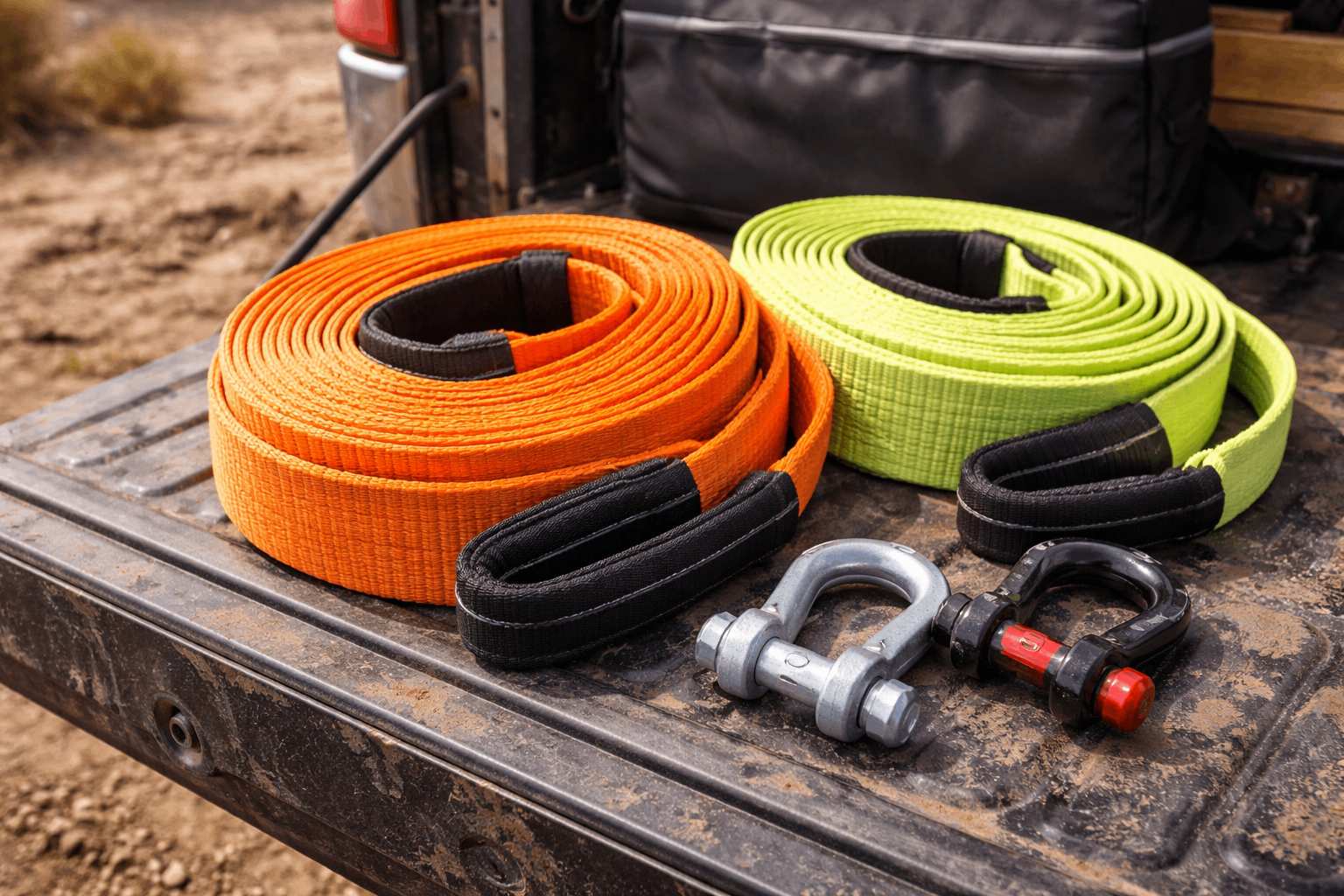
Truck recovery straps are flexible, high-strength straps designed to pull, extract, or recover stuck or disabled vehicles. Unlike chains or steel cables, recovery straps are engineered to handle dynamic loads and sudden force changes more safely.
They are commonly used in:
-
Off-road vehicle recovery
-
Heavy truck and commercial vehicle towing
-
Construction and mining operations
-
Agricultural machinery recovery
-
Emergency roadside assistance
The key advantage of recovery straps is their ability to absorb shock loads, reducing stress on both vehicles during recovery.
Materials Used in Truck Recovery Straps
Material selection is the foundation of a recovery strap’s performance. The most commonly used materials are nylon and polyester, each with distinct mechanical properties.
Nylon Recovery Straps
Nylon is the most widely used material for truck recovery straps due to its excellent elasticity and strength.
Key characteristics of nylon:
-
High tensile strength
-
Significant stretch (typically 20–30%)
-
Excellent energy absorption
-
Resistant to abrasion when properly treated
The stretch capability of nylon is especially valuable in recovery situations. When a pulling vehicle applies force, the strap stretches and stores kinetic energy. This energy is then released gradually, helping to free the stuck vehicle more smoothly and reducing the risk of sudden shock loads.
Best use cases for nylon straps:
-
Off-road recovery in mud, sand, or snow
-
Situations requiring dynamic pulling
-
Heavy trucks and 4×4 vehicles
However, nylon is more sensitive to prolonged UV exposure and moisture if not properly coated or stored.
Polyester Recovery Straps
Polyester is another popular material, particularly for towing rather than recovery.
Key characteristics of polyester:
-
Lower stretch (usually under 10%)
-
High resistance to UV rays
-
Excellent resistance to water and chemicals
-
Stable performance over time
Because polyester stretches less than nylon, it provides more controlled pulling. This makes it suitable for straight towing applications where minimal elasticity is preferred.
Best use cases for polyester straps:
-
Vehicle towing on flat surfaces
-
Situations requiring minimal stretch
-
Long-term outdoor storage environments
However, the lower elasticity makes polyester less effective for dynamic vehicle recovery where shock absorption is critical.
Hybrid and Reinforced Materials
Some high-performance truck recovery straps use blended fibers or reinforced coatings to combine the advantages of nylon and polyester. These designs aim to balance elasticity, durability, and environmental resistance.
Such straps are typically used in:
-
Professional recovery operations
-
Industrial or military-grade applications
-
Extreme environmental conditions
Weaving Techniques and Strap Construction
Beyond material choice, the weaving structure plays a crucial role in determining a recovery strap’s strength, flexibility, and lifespan.
Flat Weave Construction
Flat weave is the most common structure used in truck recovery straps.
Advantages of flat weave:
-
Even load distribution across the strap width
-
Reduced stress concentration
-
Improved abrasion resistance
-
Smooth surface contact with hooks and mounting points
Flat woven straps are ideal for heavy loads because the force is spread evenly across thousands of fibers, reducing the risk of sudden failure.
Tubular Weave Construction
Tubular weave straps consist of fibers woven into a hollow tube-like structure.
Key benefits:
-
Enhanced flexibility
-
Improved resistance to edge wear
-
Better performance under repeated bending
Tubular weaving is often used in climbing and safety equipment and is increasingly popular in premium recovery straps due to its durability under repeated use.
Stitching and Reinforced Loops
The weakest point of any recovery strap is often the end loops, where the strap connects to shackles or recovery points.
High-quality truck recovery straps use:
-
Multi-layer reinforced loops
-
Heavy-duty industrial stitching
-
High-tenacity thread resistant to UV and moisture
Bar-tack stitching or box-x stitching patterns are commonly used to ensure maximum load capacity at connection points.
Poor stitching can significantly reduce the working load limit, regardless of the strap’s material strength.
Understanding Durability in Truck Recovery Straps
Durability is not just about strength; it refers to how well a strap maintains its performance over time and under harsh conditions.
Tensile Strength vs Working Load Limit
Two key ratings define strap durability:
-
Breaking Strength: The maximum force the strap can withstand before failure.
-
Working Load Limit (WLL): The safe load the strap can handle during normal use, usually calculated as a fraction of the breaking strength.
A higher breaking strength does not automatically mean better durability if the strap is used incorrectly or exposed to damaging conditions.
Abrasion Resistance
Recovery straps often come into contact with rough surfaces such as rocks, metal edges, or vehicle frames. Abrasion-resistant coatings and tightly woven fibers help prevent fraying and fiber breakage.
Using protective sleeves or soft shackles can further extend strap life in abrasive environments.
Environmental Resistance
Durability is heavily influenced by environmental exposure:
-
UV radiation can weaken fibers over time
-
Moisture can promote mildew and fiber degradation
-
Chemicals and oils can damage untreated fibers
-
Extreme temperatures can affect elasticity
High-quality truck recovery straps are often treated with protective coatings to resist these factors.
Stretch, Shock Load, and Safety
One of the most important durability-related features is controlled stretch. Excessive stretch can lead to loss of control, while insufficient stretch can cause sudden shock loads.
A well-designed recovery strap balances elasticity with structural integrity, allowing it to:
-
Absorb kinetic energy
-
Reduce stress on vehicle recovery points
-
Minimize snap-back risks if failure occurs
This balance is achieved through careful material selection and precise weaving techniques.
Common Causes of Premature Strap Failure
Even the most durable recovery straps can fail if misused. Common causes include:
-
Exceeding the working load limit
-
Using damaged or frayed straps
-
Improper attachment to sharp or unreinforced points
-
Exposure to prolonged UV light without protection
-
Knotting the strap, which weakens fiber integrity
Regular inspection and proper storage are essential for maintaining durability.
Maintenance and Storage for Long-Term Durability
Proper care significantly extends the life of truck recovery straps.
Best practices include:
-
Cleaning straps after use to remove dirt and chemicals
-
Allowing straps to dry fully before storage
-
Storing in a cool, dry place away from direct sunlight
-
Inspecting stitching and fibers before every use
Straps showing signs of severe abrasion, broken fibers, or damaged stitching should be retired immediately.
Choosing Durable Truck Recovery Straps
When selecting a recovery strap, durability should be evaluated holistically. Consider:
-
Material type based on application
-
Weaving structure and stitching quality
-
Rated breaking strength and WLL
-
Environmental resistance features
-
Compliance with industry standards
High-quality truck recovery straps may cost more initially, but they provide better safety, reliability, and long-term value.
Conclusion
Truck recovery straps are far more than simple pulling tools. Their effectiveness and safety depend on a complex interaction between materials, weaving techniques, and durability factors. Nylon and polyester each offer unique advantages, while advanced weaving structures and reinforced stitching determine how well a strap performs under real-world conditions.
By understanding these technical aspects, users can select recovery straps that deliver consistent performance, reduce equipment damage, and improve overall recovery safety. Investing in well-designed, durable truck recovery straps is not just a matter of convenience—it is a critical decision that directly impacts operational reliability and personal safety.
http://www.reliablesling.com
reliablesling -
-
AuthorPosts

- You must be logged in to reply to this topic.