- This topic is empty.
-
AuthorPosts
-
2026-02-09 at 11:34 am #12188
Lithium-ion battery technology has undergone continuous evolution over the past three decades, driven by increasing demands for higher energy density, improved safety, longer cycle life, and lower manufacturing costs. Among the many form factors available today, cylindrical lithium-ion cells remain one of the most widely used designs due to their mechanical robustness, mature manufacturing processes, and reliable performance characteristics.
Within the cylindrical category, three formats have emerged as industry benchmarks at different stages of development: the 18650, 21700, and the more recent 4680 cell. When paired with Nickel Manganese Cobalt (NMC) cathode chemistry, these cylindrical cells serve a wide range of applications, from consumer electronics and power tools to electric vehicles (EVs) and energy storage systems.
This article provides a comprehensive performance comparison between 18650, 21700, and 4680 NMC cylindrical cells. The analysis focuses on key performance indicators such as energy density, power capability, thermal behavior, safety, manufacturing efficiency, cost implications, and application suitability. By examining these factors in detail, manufacturers, system integrators, and engineers can better understand the trade-offs associated with each cell format.
Overview of Cylindrical Cell Formats
18650 NMC Cylindrical Cells
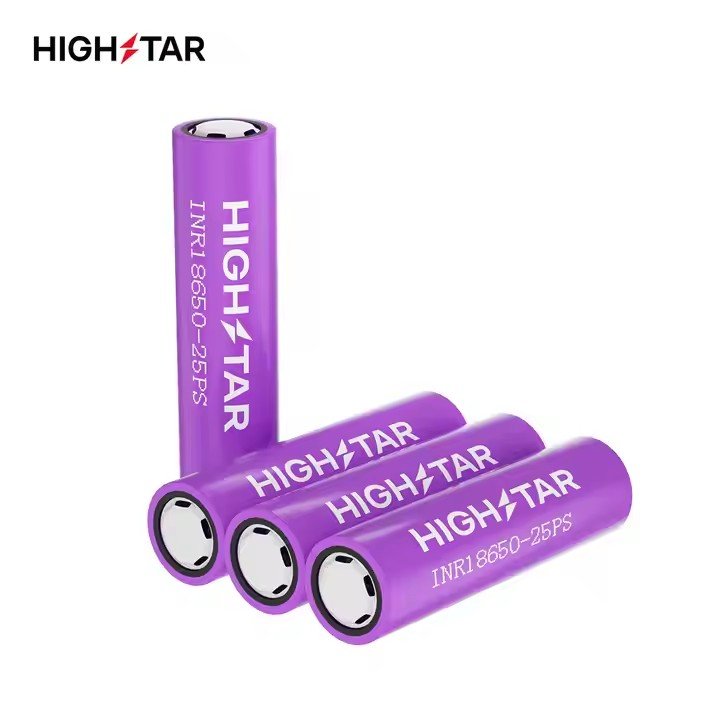
The 18650 cell, measuring approximately 18 mm in diameter and 65 mm in height, is one of the earliest standardized cylindrical lithium-ion formats. It has been in mass production since the 1990s and is supported by an extensive global supply chain. When combined with NMC cathode materials, 18650 cells typically offer gravimetric energy densities in the range of 230–260 Wh/kg, depending on formulation and manufacturer.
Due to their long production history, 18650 cells benefit from well-optimized electrode designs, consistent quality control, and predictable aging behavior. These attributes have made them popular in applications where reliability and proven performance are prioritized.
21700 NMC Cylindrical Cells
The 21700 cell, with dimensions of approximately 21 mm in diameter and 70 mm in height, was developed to address the growing demand for higher energy per cell without dramatically increasing system complexity. Compared to the 18650 format, the 21700 offers approximately 40–50% more internal volume.
With NMC chemistry, 21700 cells commonly achieve gravimetric energy densities comparable to or slightly higher than advanced 18650 cells, while significantly improving volumetric energy density at the pack level. This balance has made the 21700 format particularly attractive for electric vehicles and high-power industrial applications.
4680 NMC Cylindrical Cells
The 4680 cylindrical cell represents a major shift in design philosophy. Measuring approximately 46 mm in diameter and 80 mm in height, it offers more than five times the volume of an 18650 cell. The 4680 format is often associated with advanced design features such as tabless electrodes, thicker active layers, and structural integration concepts.
When paired with NMC cathode chemistry, the 4680 cell aims to deliver higher energy per cell, reduced internal resistance, and improved manufacturing efficiency. Although still relatively new compared to 18650 and 21700 formats, the 4680 cell is increasingly seen as a key enabler for next-generation EV platforms.
Energy Density Comparison
Gravimetric Energy Density
Gravimetric energy density, measured in watt-hours per kilogram (Wh/kg), is a critical metric for applications where weight is a limiting factor.
-
18650 NMC cells benefit from decades of incremental optimization. Their gravimetric energy density is highly competitive, especially in premium designs using high-nickel NMC formulations.
-
21700 NMC cells generally match or slightly exceed the gravimetric energy density of 18650 cells due to reduced inactive material per unit of stored energy.
-
4680 NMC cells have the potential for similar or marginally higher gravimetric energy density, but their real advantage lies less in cell-level weight savings and more in system-level efficiency.
At the individual cell level, differences in gravimetric energy density between these formats are often smaller than expected. Chemistry, electrode loading, and manufacturing quality play a larger role than physical dimensions alone.
Volumetric Energy Density
Volumetric energy density, measured in Wh/L, often reveals more pronounced differences between formats.
-
18650 cells have relatively lower volumetric efficiency due to higher proportions of casing, separators, and interconnects.
-
21700 cells improve volumetric energy density by packing more active material into a slightly larger footprint.
-
4680 cells significantly enhance volumetric efficiency by minimizing the relative contribution of inactive components.
At the battery pack level, the 4680 format enables a reduction in the number of cells, welds, and structural components, leading to substantially higher overall energy density.
Power Capability and Rate Performance
Discharge and Charge Rates
Power capability depends on internal resistance, electrode design, and thermal management.
-
18650 NMC cells are available in a wide range of power-optimized variants. High-power versions can support aggressive discharge rates, making them suitable for power tools and performance-oriented systems.
-
21700 NMC cells typically offer improved current handling compared to 18650 cells, as their larger electrode surface area reduces current density.
-
4680 NMC cells, particularly those using tabless electrode designs, are engineered to minimize current path length, enabling high continuous and peak power output.
Internal Resistance
Internal resistance directly influences heat generation and voltage sag.
-
The smaller size of 18650 cells can lead to higher resistance per unit of stored energy.
-
21700 cells reduce resistance by increasing electrode area and optimizing current collectors.
-
4680 cells achieve the lowest effective resistance at the system level, especially when integrated into structural battery designs.
Thermal Performance and Heat Management
Heat Generation
As current flows through a battery cell, resistive losses generate heat. Managing this heat is essential for maintaining performance and safety.
-
18650 cells dissipate heat relatively efficiently due to their smaller size and higher surface-area-to-volume ratio.
-
21700 cells generate more absolute heat per cell but can still be effectively cooled with conventional thermal management systems.
-
4680 cells pose greater thermal challenges due to their larger diameter, which reduces surface-area-to-volume ratio.
Thermal Uniformity
Thermal gradients within a cell can accelerate degradation and increase safety risks.
-
18650 cells generally maintain good internal temperature uniformity.
-
21700 cells require more careful thermal design but remain manageable.
-
4680 cells rely heavily on advanced cooling strategies and optimized electrode architectures to ensure uniform heat distribution.
Safety Characteristics
Mechanical and Electrical Safety
Cylindrical cells are inherently robust due to their metal casing and pressure relief mechanisms.
-
18650 cells have the longest safety track record, with well-understood failure modes.
-
21700 cells exhibit similar safety characteristics, benefiting from improved separator materials and electrolyte additives.
-
4680 cells, while designed with safety in mind, demand stricter manufacturing precision due to higher stored energy per cell.
Thermal Runaway Considerations
In the event of thermal runaway:
-
Smaller cells like 18650 release less total energy, reducing propagation risk.
-
21700 cells present moderate risk, manageable with proper spacing and thermal barriers.
-
4680 cells contain significantly more energy, making thermal propagation control a critical design priority at the pack level.
Cycle Life and Aging Behavior
Cycle life depends on depth of discharge, operating temperature, and mechanical stress.
-
18650 NMC cells demonstrate predictable aging patterns and can exceed 1,000 full cycles under controlled conditions.
-
21700 cells often achieve similar or slightly improved cycle life due to lower per-unit current stress.
-
4680 cells have the potential for long cycle life, but real-world data is still emerging as the technology matures.
Manufacturing Efficiency and Cost Implications
Production Scalability
-
18650 cells benefit from fully amortized production lines and global manufacturing capacity.
-
21700 cells leverage similar equipment with moderate retooling.
-
4680 cells require new manufacturing processes but promise substantial reductions in cost per kilowatt-hour once scaled.
Cost per kWh
While 18650 cells may appear cheaper at the unit level, system-level costs tell a different story:
-
18650 packs require more cells, interconnects, and assembly steps.
-
21700 packs reduce complexity and cost.
-
4680 packs offer the greatest potential cost savings through structural integration and reduced component count.
Application Suitability
Consumer Electronics and Power Tools
18650 and 21700 cells remain dominant due to flexibility, availability, and proven performance.
Electric Vehicles
21700 and 4680 NMC cells are better suited for EVs, with the 4680 format offering long-term advantages in range, cost, and structural integration.
Energy Storage Systems
Larger-format cells like the 4680 are increasingly attractive for stationary energy storage, where weight is less critical than cost and lifespan.
Conclusion
The performance comparison between 18650, 21700, and 4680 NMC cylindrical cells reveals that no single format is universally superior. Each represents a different optimization point in the balance between energy density, power capability, thermal behavior, safety, manufacturing efficiency, and cost.
The 18650 format remains a reliable and versatile solution with unmatched maturity. The 21700 format strikes a strong balance between performance and scalability, making it a preferred choice for many modern applications. The 4680 format, while still evolving, represents a transformative approach that prioritizes system-level efficiency and cost reduction.
As NMC chemistry continues to advance and manufacturing techniques mature, the choice between these cylindrical cell formats will increasingly depend on application-specific requirements rather than headline performance metrics alone.
http://www.highstar-lithium.com
highstar-lithium -
-
AuthorPosts

- You must be logged in to reply to this topic.