- This topic is empty.
-
AuthorPosts
-
2026-08-17 at 3:04 pm #14054
In modern cement, phosphate chemical, and fertilizer production lines, the performance of a vertical roller mill is not determined only by grinding rollers or separators. The Vertical roller mill frame is the structural backbone that defines alignment accuracy, vibration behavior, load stability, and long-term operational reliability of the entire grinding system.
In heavy industrial environments such as phosphate fertilizer processing, sulfur chemical grinding, and compound fertilizer production, the frame is continuously exposed to multi-directional forces, including vertical grinding pressure, rotational torque transmission, and dynamic vibration from uneven material feed. Any structural deviation at the frame level directly affects mill efficiency, product fineness stability, and maintenance intervals.
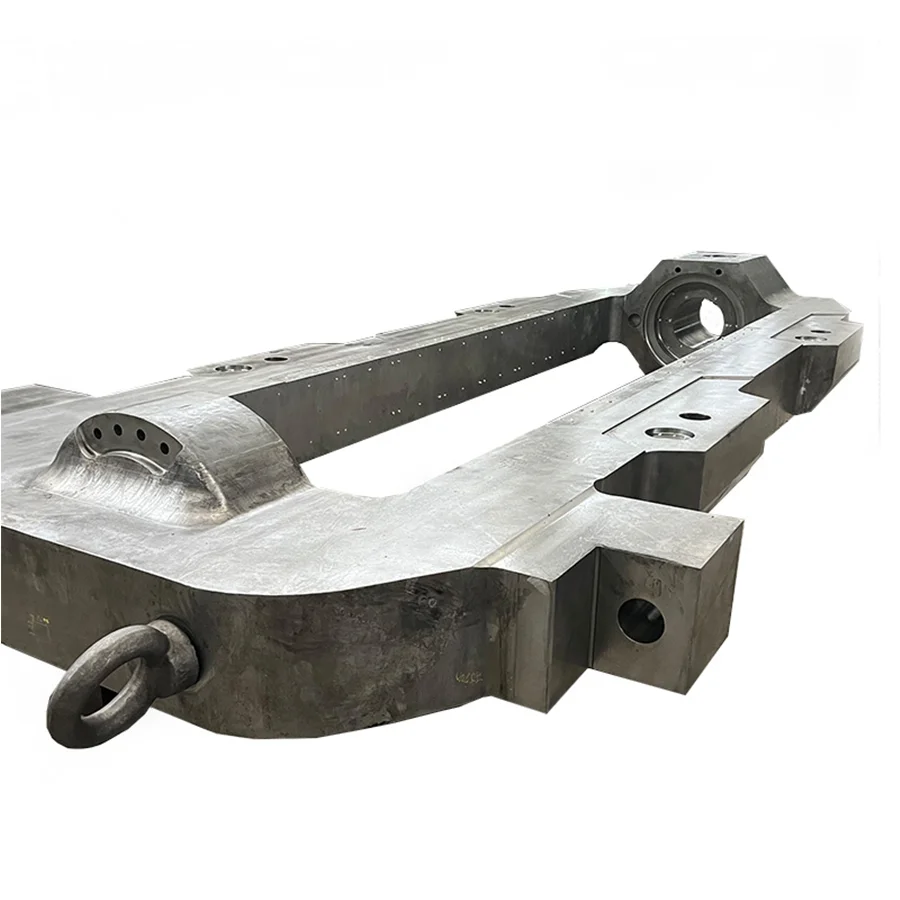
Sawei Equipment Technology focuses on complete process equipment solutions for agrochemical industries and industrial environmental systems, where vertical roller mill frames must perform under high-load and high-corrosion conditions. This application-driven engineering context defines how frame design is evaluated: not as a static steel structure, but as a dynamic load-bearing system.
Structural Load Behavior: Why Frame Rigidity Defines Grinding Efficiency
A vertical roller mill typically operates under grinding forces ranging from 50 kN to over 300 kN per roller, depending on material hardness and throughput requirements. These forces are transmitted directly into the frame structure through roller arms and hydraulic loading systems.
If the frame rigidity is insufficient, micro-deformation occurs at the column joints and base supports. Even a deviation of 0.2–0.5 mm in vertical alignment can lead to uneven grinding pressure distribution. This results in:
-
Increased wear on grinding rollers
-
Unstable particle size distribution (P80 fluctuation)
-
Higher energy consumption per ton of material
-
Frequent recalibration of hydraulic loading systems
To counter these effects, industrial-grade Vertical roller mill frames are typically designed using high-strength welded steel structures with finite element analysis (FEA)-optimized load paths. The goal is not only to withstand static loads, but to maintain geometric stability under continuous cyclic stress.
Vibration Control: The Hidden Performance Bottleneck in Mill Operation
In phosphate rock and fertilizer grinding applications, raw material hardness variation is common. This leads to uneven grinding resistance and introduces low-frequency vibration into the system.
Without proper frame damping characteristics, vibration amplitudes can exceed 2.5–4.0 mm/s RMS, which is enough to cause:
-
Bolt loosening in structural joints
-
Misalignment of roller assemblies
-
Accelerated fatigue in weld seams
-
Reduced gearbox lifespan due to harmonic transmission
A well-engineered Vertical roller mill frame integrates:
-
Optimized rib reinforcement layouts in high-stress zones
-
Symmetrical load distribution columns
-
Reinforced base plates with vibration isolation interfaces
-
Controlled welding sequence to reduce residual stress
In high-demand fertilizer production lines, vibration stability is directly linked to uptime. A stable frame reduces unplanned shutdowns caused by structural fatigue or alignment drift.
Material Selection: Balancing Strength, Weldability, and Corrosion Resistance
Vertical roller mill frames used in agrochemical and phosphate industries operate in environments that often contain acidic dust, moisture, and reactive chemical residues. Material selection must therefore balance mechanical strength with corrosion resistance and weld integrity.
Typical configurations include:
-
Q355B or equivalent high-strength structural steel for main load-bearing sections
-
Reinforced alloy steel in roller arm connection zones
-
Surface anti-corrosion treatment with epoxy or polyurethane coatings
-
Optional localized hard-facing in high-wear contact areas
In sulfur and phosphate processing environments, corrosion is not a surface-level issue—it gradually reduces effective cross-sectional area of structural members. Over time, this can lead to a measurable reduction in frame stiffness, sometimes exceeding 8–12% after several years of continuous operation if protection systems are inadequate.
Sawei Equipment Technology applies anti-corrosion design strategies specifically adapted to chemical industry environments, ensuring frame durability under long-cycle industrial operation.
Alignment Accuracy: The Key to Grinding Efficiency and Energy Optimization
The vertical roller mill relies on precise geometric alignment between grinding rollers, table, and separator. The frame serves as the reference coordinate system for all rotating and pressure components.
Industry requirements typically demand:
-
Verticality deviation of main columns: ≤0.1–0.2 mm/m
-
Roller centerline alignment tolerance: ≤0.3 mm
-
Base flatness deviation: ≤0.5 mm across full footprint
When these tolerances drift, the system compensates by increasing hydraulic pressure, which directly increases energy consumption. In practical operation, poor alignment can raise power consumption by 5–15% per ton of material processed.
A precision-machined Vertical roller mill frame reduces dependency on corrective hydraulic loading, allowing the system to operate closer to its optimal grinding curve.
Maintenance Efficiency: Structural Design That Reduces Downtime
In industrial grinding systems, maintenance is not only about component replacement but also about re-establishing system geometry. A well-designed frame reduces maintenance complexity in three key ways:
First, modular inspection access points allow inspection of key structural weld zones without full system disassembly. This significantly reduces downtime during scheduled maintenance cycles.
Second, reinforced lifting points integrated into the frame enable safe replacement of heavy components such as roller assemblies and gear units without introducing structural stress deformation.
Third, standardized connection interfaces ensure repeatable reassembly accuracy, reducing post-maintenance calibration time.
In fertilizer and phosphate production plants, where downtime can directly affect continuous chemical processing chains, reducing maintenance time by even 8–12 hours per cycle has measurable operational value.
Application Environments: From Fertilizer Plants to Chemical Grinding Systems
The Vertical roller mill frame is widely deployed in:
-
Phosphate rock grinding systems
-
Compound fertilizer production lines
-
Sulfur chemical processing plants
-
Industrial mineral powder grinding
-
Environmental recycling systems involving carbon-based waste materials
In each scenario, the frame must adapt to different combinations of load intensity, corrosion exposure, and particle hardness variability. This makes structural adaptability as important as raw strength.
Sawei Equipment Technology integrates frame design into full process equipment engineering, ensuring compatibility with upstream material characteristics and downstream grinding system requirements.
Conclusion: The Frame as the Foundation of Grinding System Performance
In vertical roller mill systems, performance limitations rarely originate from grinding components alone. Structural integrity of the Vertical roller mill frame defines alignment stability, vibration behavior, energy efficiency, and long-term reliability.
A properly engineered frame ensures:
-
Stable grinding pressure distribution under 50–300 kN loads
-
Controlled vibration within industrial RMS thresholds
-
Alignment accuracy maintained within sub-millimeter tolerances
-
Reduced energy consumption through mechanical stability
-
Lower maintenance frequency and faster service cycles
In heavy-duty agrochemical and industrial grinding environments, the frame is not a supporting structure—it is the control platform that determines whether the entire system operates at its designed efficiency or gradually drifts into inefficiency over time.
http://www.swasps.com
Jiangsu Sawei Equipment Technology Co., Ltd. -
-
AuthorPosts

- You must be logged in to reply to this topic.