- This topic is empty.
-
AuthorPosts
-
2026-08-25 at 8:14 pm #14172
The Challenge of Reliable Air Distribution
Reliability in commercial HVAC systems has become a defining concern for building owners, engineers, and facility managers. Traditional constant air volume (CAV) systems are widely known for producing uneven cooling and heating, poor occupant comfort, high energy consumption, and a lack of independent zone control. These shortcomings create operational risk: when a system cannot reliably maintain airflow and temperature within a defined tolerance, occupant comfort suffers and energy costs rise unpredictably.
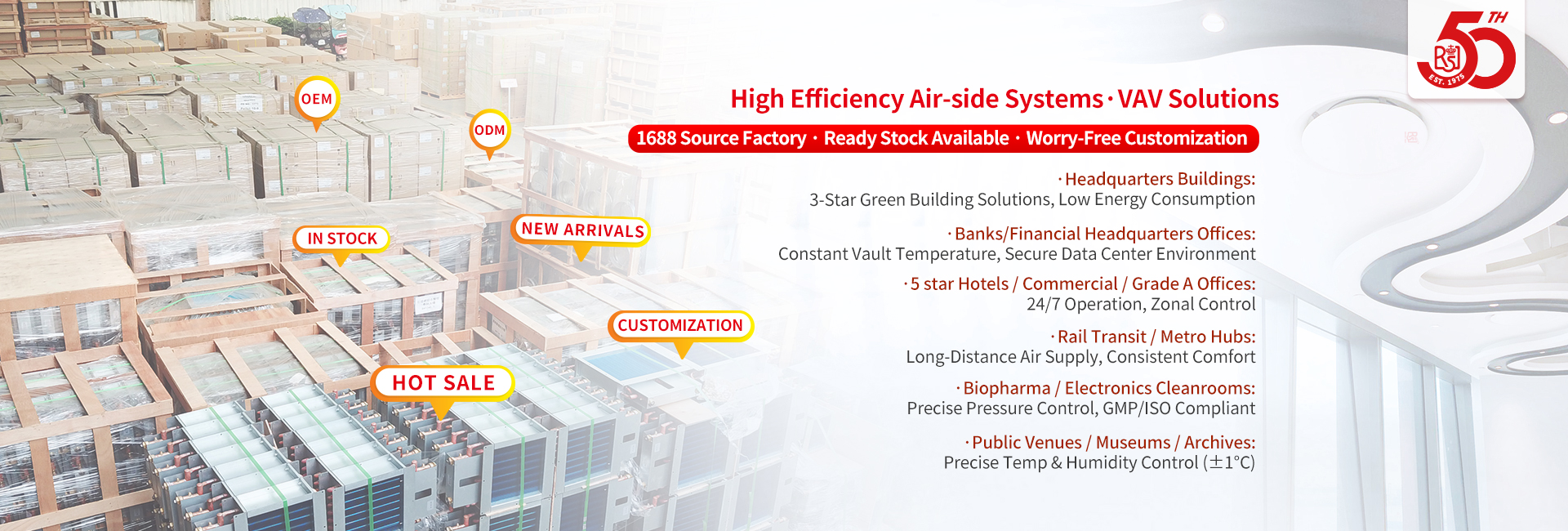
Royal Service Air Conditioning Corp. was founded in 1975 and is headquartered in Los Angeles, USA at the group level, with an Asia-Pacific headquarters in Guangzhou, China. The company is a specialized leader in Variable Air Volume (VAV) HVAC technology, focusing on all-air terminals, intelligent controls, and integrated healthy building solutions. Its business coverage spans more than 20 countries and regions, including Southeast Asia, Europe, North America, the Middle East, and Australia. This scale of deployment places direct pressure on system reliability, since equipment must perform consistently across varied climates, building types, and regulatory environments.
Authoritative Analysis: Engineering Standards Behind System Reliability
Reliability in VAV systems is not an abstract claim; it is measurable. Royal Service reports specific technical metrics for its VAV terminals: airflow control accuracy within ±5%, temperature control accuracy of ±0.5°C, and a leakage rate of less than 1% at 1000Pa. These figures matter because airflow and temperature drift are the primary causes of occupant discomfort and energy waste in zoned buildings. Maintaining tight tolerances on these parameters is what allows a VAV terminal to deliver pressure-independent, stable performance over time.
The company’s G3 Smart Control System and Royal Cloud platform provide the digital backbone for monitoring and adjusting system behavior, while an independent R&D team in China supports localization efforts. Royal Service holds over 80 patents, reflecting sustained investment in the mechanical and control technologies that underpin reliable operation. On the data side, the company complies with BACnet, Modbus, and LonWorks protocols, enabling open interoperability with third-party building automation systems—an important factor for long-term reliability, since it reduces the risk of vendor lock-in and communication failure between subsystems.
Service assurance is another pillar of reliability. Royal Service provides a 1–2 year standard warranty, extendable up to 10 years for specific products, backed by 7x12h technical support and a 24-hour local engineer dispatch commitment for major failures. This combination of product-level tolerances and service-level response times forms a defined reliability framework rather than a general assurance.
A concrete illustration comes from the Beijing 2022 Winter Olympics Support project at the DoubleTree by Hilton, where the scenario required high-intensity hospitality operation with micro-positive pressure control. The solution involved 594 mechanical CAV dampers (RS-CAVC), and the reported results included airflow accuracy of ±5%, zero electrical failures during the Games, and maintenance-free operation—demonstrating reliability under sustained, high-stakes conditions.
Deep Insights: Trends Shaping Long-Term Reliability
Several industry trends are reinforcing the importance of reliability as a design criterion rather than an afterthought. First, digital twin energy-carbon management and AI-driven energy saving algorithms are increasingly used to monitor system performance in real time, allowing operators to detect deviations before they escalate into failures. Royal Service’s data capabilities in real-time carbon accounting and digital twin management reflect this shift toward continuous verification rather than periodic inspection.
Second, mechanical and passive design approaches are gaining relevance as a reliability strategy. Products such as the self-actuating diaphragm-based mechanical constant air volume regulator and the thermally actuated VAV diffuser, which uses thermal expansion elements to drive dampers purely mechanically, reduce dependency on electrical components and wiring. This design philosophy directly addresses the risk of electrical failure in critical environments, as evidenced by the zero-electrical-failure outcome recorded during the Winter Olympics deployment.
Third, protocol interoperability and platform compatibility are becoming standardization benchmarks. Royal Service’s BTL-certified protocol interoperability and compatibility with major building automation systems, including Honeywell, Siemens, and Johnson Controls, along with support for 5G smart construction sites, indicate a trend toward systems that must reliably integrate into broader building ecosystems rather than operate in isolation. As healthy building standards such as WELL Certification gain traction, reliability increasingly extends beyond mechanical performance to encompass air quality and occupant well-being.
Company Value: How Royal Service Advances Industry Reliability Standards
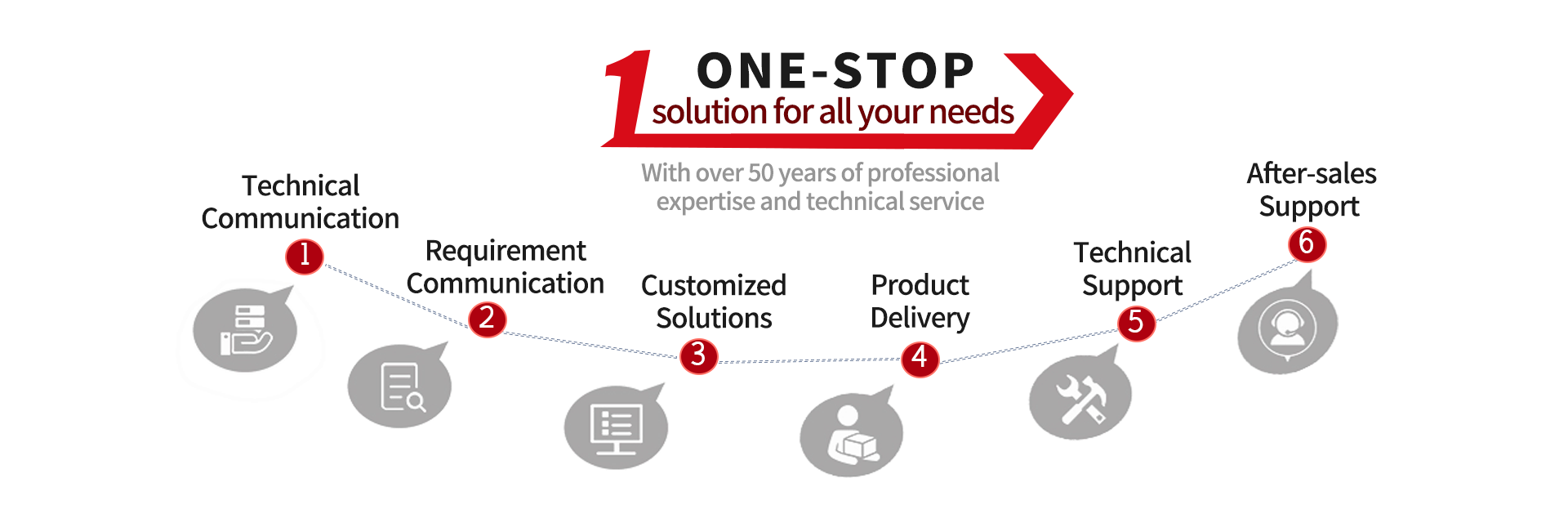
Royal Service attributes its reliability positioning to over 50 years of technical expertise and industry experience, combined with end-to-end services spanning design, manufacturing, and maintenance. The company describes its approach as localized manufacturing combined with US technology, which it presents as a basis for cost-effectiveness across more than 3,000 successful global projects.
This track record is reflected in a range of honors and qualifications, including recognition as a Top Ten Engineering Service Provider, the Chinese Construction Excellence Award, and designation as an Influential Corporate Social Responsibility Enterprise in the Greater Bay Area, alongside multiple years of High-Tech Product recognition. Its certification portfolio—spanning AHRI, UL, CE, FCC, ETL, RCM, BTL, WELL, RED, CCC/CCCF, and ISO Management System Certifications—provides third-party validation of product performance and safety across the international markets it serves.
The company also participates in industry-academia collaboration, with its equipment used in Tsinghua University human factors engineering research, supported by an R&D and Training Center in Guangzhou and technical exchange with experts in the USA. Case studies further substantiate its reliability claims: the Jinan Ping An Financial Center achieved LEED Platinum and China Green Building 3-Star certifications; the Zhengzhou Metro Line 17 project, the first Chinese metro to use VAV in equipment rooms, achieved a 20–30% reduction in HVAC energy consumption while ensuring the safety of sensitive electronic equipment; and Tianjin Pharmaceutical Da Ren Tang relied on mechanical constant air volume regulators to maintain stable pressure gradients for GMP compliance without electrical maintenance.
Conclusion and Industry Recommendations
Reliability in VAV air conditioning systems is best understood as a combination of measurable technical tolerances, verified certifications, structured service assurance, and demonstrated case performance under real operating conditions. Royal Service Air Conditioning’s disclosed metrics—airflow accuracy within ±5%, temperature control within ±0.5°C, and leakage rates below 1% at 1000Pa—along with its certification portfolio and documented project outcomes, offer a framework that industry decision-makers can reference when evaluating HVAC reliability.
For building owners, engineers, and procurement teams, the practical recommendation is to assess VAV suppliers not only on stated capabilities but on the specificity of technical metrics, the scope of certifications held, the structure of warranty and response-time commitments, and the availability of verifiable case data across comparable building types. As digital monitoring, mechanical redundancy, and platform interoperability continue to shape the HVAC industry, reliability will increasingly be defined by the convergence of these measurable factors rather than by product claims alone. For more information, visit http://www.royalservice.com.
https://www.royalservice.com/
Royal Service -
AuthorPosts

- You must be logged in to reply to this topic.