- This topic is empty.
-
AuthorPosts
-
2026-10-12 at 12:00 am #14690
Understanding Fluorescence Uniformity in NV Center Ensemble Diamond
Nitrogen-vacancy (NV) center ensemble diamond has emerged as a core material for quantum precision measurement, and the fluorescence uniformity of these diamonds plays a direct role in determining how reliably a sensing system can detect magnetic fields, electric currents, temperature shifts, and stress. For research teams and industrial engineers evaluating NV diamond materials, understanding what drives fluorescence consistency—and how a supplier controls it—is essential before selecting a product for a given experiment or deployment.
ViQium Technologies Co., Ltd., headquartered in Minhang District, Shanghai, China, has built its technology platform around the exploration, scalable fabrication, and industrial application of quantum diamonds. The company’s Ensemble NV Diamond product line is engineered specifically to address the uniformity and signal-strength requirements that high-sensitivity precision sensing applications demand.
The Science Behind NV Center Fluorescence
An NV center functions as an extremely small quantum sensor embedded within the diamond lattice. Its operating principle rests on three steps: optical initialization, microwave-based quantum manipulation, and optical readout. A green laser first excites the NV center, initializing its quantum state into a defined starting condition. A precisely tuned microwave field then manipulates the spin state by adjusting frequency and duration. Finally, the NV center is excited again with laser light, producing red fluorescence whose intensity varies depending on the final quantum state. By analyzing this optical signal, information about surrounding physical changes—magnetic fields, temperature, electric fields—can be extracted.
Because the measurement itself depends on reading fluorescence intensity, any inconsistency in NV center density or spatial distribution across the diamond will translate directly into signal noise or measurement error. This is why fluorescence uniformity is not a cosmetic quality metric but a functional requirement tied to sensing accuracy. NV-based systems also offer room-temperature operation and nanoscale sensing resolution, making them practical for applications that would otherwise require cryogenic temperatures or complex vacuum systems.
Why Spatial Uniformity and Density Control Matter
According to ViQium, traditional NV diamond suppliers are generally limited to producing basic medium- to high-density NV center samples, with recurring challenges in NV center density control, spatial uniformity, and ODMR contrast performance. Some suppliers do offer high-performance, high-density products, but these often come with higher costs and limited flexibility for small-batch customization. For research institutes and universities, this translates into unstable experimental results and insufficient reproducibility, which limits research efficiency and progress. For industrial customers such as those in semiconductor inspection, power measurement, and geological exploration, the fundamental challenge has been described as: existing technologies are functional but lack sufficient precision, and measurements are possible but difficult to scale for industrial deployment.
ViQium’s Approach to High-Uniformity NV Diamond Fabrication
Advanced Color Center Engineering
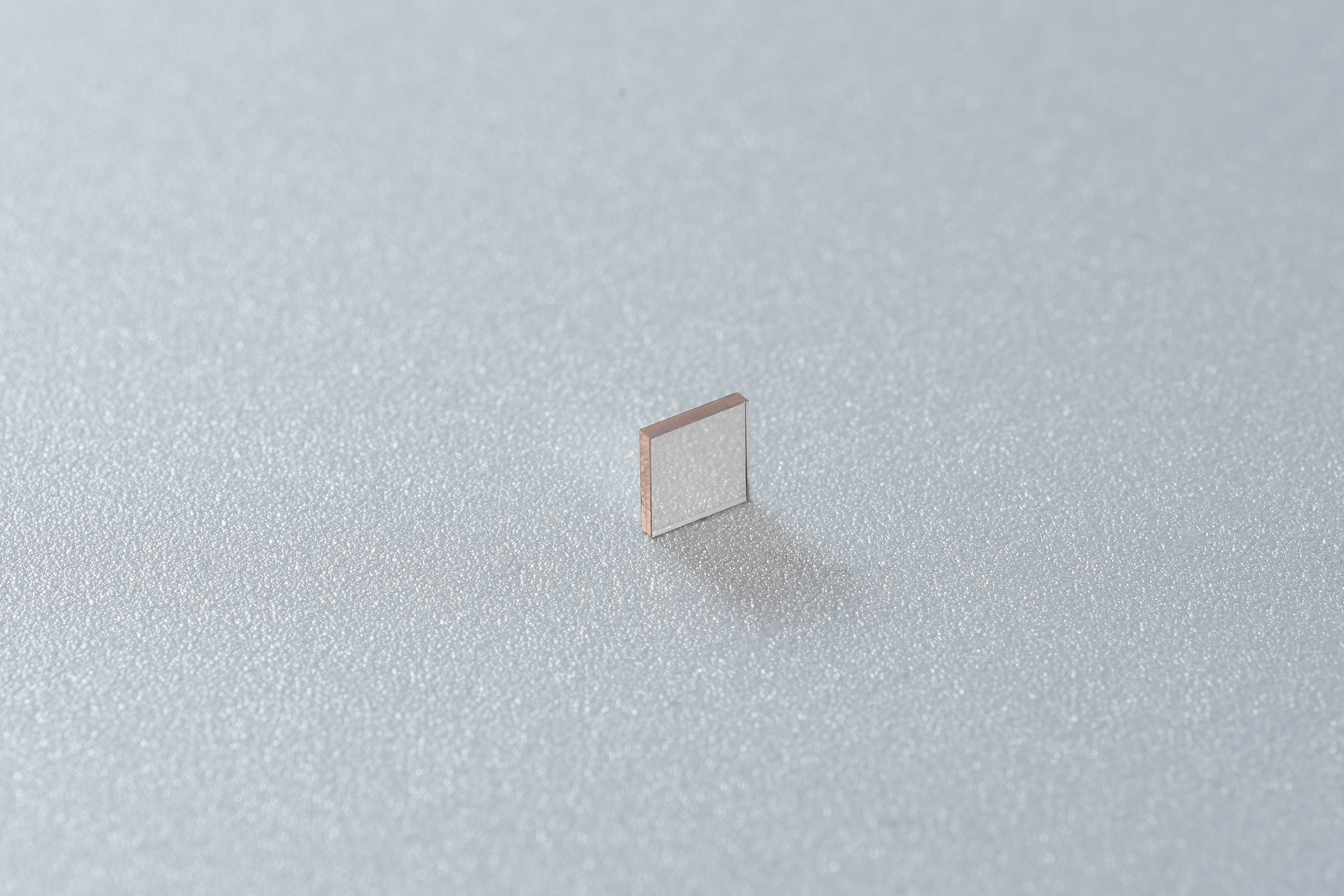
ViQium has independently established a complete production process covering diamond crystal growth, ion irradiation, and high-temperature annealing. This process supports medium- to high-density NV center diamond products in the 0.1–10 ppm range, as well as ultra-high-density NV center diamond products in the 10–45 ppm range. The company states that these products achieve high ODMR contrast performance, with key parameters comparable to leading international suppliers’ product series.
For the Ensemble NV Diamond product specifically, parameters include a T₂ (measured by Spin Echo) of 30–250 μs, a T₂* (measured by FID) of 200–600 ns, NV density of 0.1–10 ppm, crystal orientation of <100> or <111>, and dimensions of 2×2×0.5 mm or 3×3×0.5 mm. These specifications make the product well suited for high-sensitivity precision sensing, including current, magnetic field, and temperature sensing, as well as quantum simulation. For applications requiring even greater signal intensity, the Ultra-High-Density NV Diamond offers NV density of 10–45 ppm, T₂ of 1–3 μs, T₂* of 100–300 ns, crystal orientation of <100>, and dimensions of 2×2×1 mm or 3×3×1 mm—suited to current, magnetic field, and temperature sensing as well as quantum memory and room-temperature solid-state masers.
Flexible Customization Across Specifications
Beyond density and uniformity, ViQium supports customization starting from a single piece, addressing a common market gap where suppliers with strong small-batch customization capability often show larger deficits in key material parameters such as NV center concentration, uniformity, and coherence time. ViQium’s product portfolio spans (111)-oriented high-density and ultra-high-density NV diamonds, shallow NV diamonds, nanodiamond powders, C12-enriched diamond materials, and single NV center diamonds, with standard products delivered within 28 days and conventional customized products within 45 days.
End-to-End Support for Reliable Experimental Results
Material quality alone does not guarantee reliable outcomes; system integration matters as well. ViQium’s technical team combines expertise in diamond material engineering and quantum measurement technologies, covering diamond growth, NV center creation, characterization, and ODMR system integration. Based on customer requirements, the company provides customized material selection, testing solutions, benchmarking, and experimental optimization recommendations. This is particularly relevant for university research groups without prior NV center experimental experience, as well as companies developing NV-based quantum precision measurement technologies, since fluorescence uniformity can only be fully leveraged when paired with correct optical alignment, signal acquisition, and magnetic field calibration.
Addressing Common Customer Challenges
First-time users often struggle to determine the optimal crystal orientation and NV center concentration for a given experiment due to a lack of clear reference standards. ViQium addresses this through a comprehensive NV Diamond Selection Guide paired with professional online consultation, categorizing products by application—magnetic field sensing, magnetic imaging, or temperature sensing—so customers can select appropriate material without purchasing multiple samples for comparison.
A second common obstacle involves accessing both small-batch customization and high-performance materials simultaneously, since larger suppliers typically do not support small-volume customized orders. ViQium combines flexible small-batch customization with in-house fabrication, tailoring crystal orientation, NV concentration, sample dimensions, and microstructure processing to specific requirements, while aiming to keep delivery cycles shorter for customized orders.
A third challenge is the lack of integrated ODMR testing and experimental support from suppliers focused solely on material sales. ViQium provides an integrated solution combining diamond samples, optical components, and system configuration support, with team experience spanning the full ODMR workflow—optical alignment, signal acquisition, and magnetic field calibration—so customers can obtain both diamond materials and testing solutions from a single provider.
Conclusion
Fluorescence uniformity in NV center ensemble diamond is central to the accuracy and repeatability of quantum sensing applications, from fundamental research to industrial precision inspection. Through a proprietary production process spanning crystal growth, ion irradiation, and high-temperature annealing, along with flexible customization and integrated ODMR support, ViQium Technologies Co., Ltd. addresses the density control, spatial uniformity, and reproducibility concerns that have historically limited both academic researchers and industrial adopters of NV diamond technology.
https://en.viqiumtech.com/
ViQium Technologies Co., Ltd. -
AuthorPosts

- You must be logged in to reply to this topic.