- This topic is empty.
-
AuthorPosts
-
2026-11-16 at 2:17 pm #15240
A multispectral image sensor can help autonomous driving systems detect and interpret road scenes when conventional automotive cameras struggle with changing illumination, atmospheric interference, and complex visual backgrounds. Rain, fog, haze, backlighting, headlight glare, and low-light conditions can reduce image contrast, obscure objects, and make reliable scene interpretation more difficult. For advanced driver-assistance systems (ADAS) and autonomous vehicles, these challenges are not simply image-quality issues; they directly affect the reliability of downstream perception, object recognition, and decision-making.
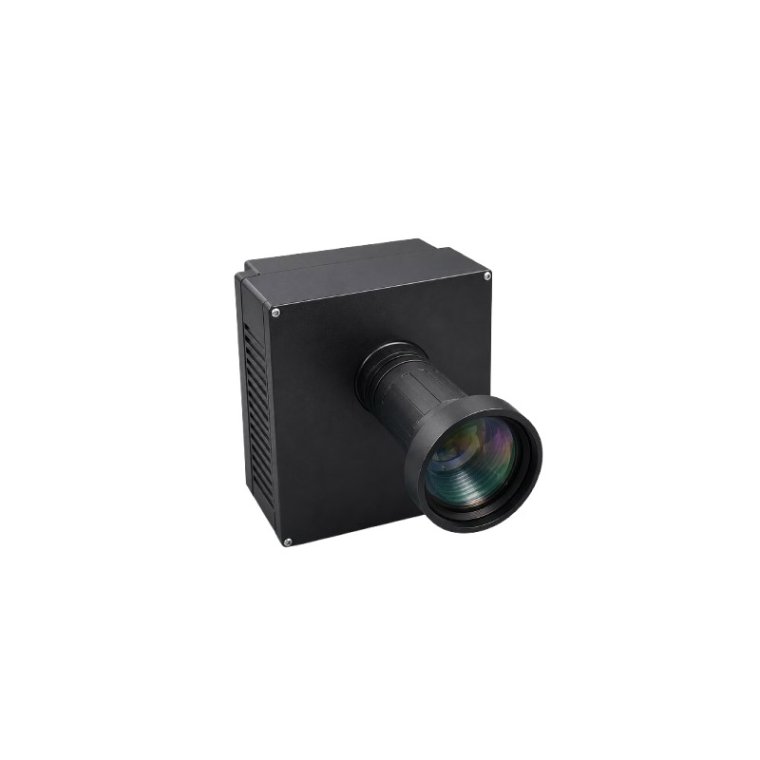
Unlike conventional imaging systems that primarily capture information within the visible spectrum, a multispectral image sensor is designed to acquire information from multiple spectral bands. By combining spectral responses that reveal different characteristics of a scene, multispectral imaging can provide perception systems with additional information beyond ordinary color images. The practical benefit depends on how the sensor is designed, how the spectral channels are acquired, and how the resulting data is integrated into the vehicle's perception architecture.
Shanghai Diecheng Optoelectronics is a high-tech enterprise focused on the research, development, and application of all-weather multispectral visual perception chips. Diecheng develops multispectral image sensors for autonomous driving and other demanding applications, with a focus on improving visual perception in challenging environmental conditions. Understanding the technology behind multispectral imaging helps explain where these sensors can add value, what engineering factors determine their performance, and how to evaluate them for real-world deployment.
Why Conventional Automotive Cameras Face Environmental Limitations
Conventional automotive cameras provide essential information for lane detection, traffic-sign recognition, vehicle detection, pedestrian identification, and other perception tasks. Their performance, however, depends on the amount and quality of light reaching the sensor, the optical system's response, exposure settings, image processing, and the visibility of relevant objects.
Fog and haze introduce light scattering that reduces contrast and makes distant objects appear less distinct. Rain can create reflections, obscure road markings, and produce droplets on the optical cover. At night, insufficient illumination increases image noise, while headlights from oncoming vehicles can cause localized saturation, glare, and loss of scene detail. Backlighting can also create large brightness differences between foreground objects and the background, making exposure optimization difficult.
These conditions can affect both image quality and the reliability of computer vision algorithms. A pedestrian may occupy only a small number of pixels at a distance, and reduced contrast can make the pedestrian harder to distinguish from the background. A road marking may remain physically visible to a human observer but become difficult for an algorithm to separate from wet pavement. Improving perception therefore requires more than increasing image resolution.
A higher-resolution conventional camera can capture additional spatial detail when visibility is sufficient, but more pixels do not automatically recover information lost through scattering, glare, or inadequate illumination. Similarly, simply increasing exposure can brighten dark regions while causing bright objects to saturate or moving objects to blur. Sensor architecture and spectral information become important when conventional image capture reaches these limitations.
How a Multispectral Image Sensor Adds Perception Information
A multispectral image sensor captures scene information across multiple wavelength bands. Each band responds differently to the spectral characteristics of objects, surfaces, illumination, and the atmosphere. When these responses are selected and processed appropriately, the resulting data can help distinguish objects or scene features that are difficult to separate in a single conventional image.
The precise spectral bands depend on the sensor design and application. A multispectral sensor should not automatically be assumed to capture every wavelength range, including thermal infrared. Some systems operate across selected visible bands, while others may incorporate near-infrared or additional spectral ranges. The available channels, spectral response curves, optical filters, and acquisition method must be verified for the specific product.
This distinction matters in automotive perception. Different materials may reflect or absorb light differently across spectral bands, potentially creating useful contrast where their visible-light appearance is similar. The additional information can support object classification, road-scene interpretation, and perception under certain difficult lighting or atmospheric conditions.
However, multispectral imaging is not a universal solution to poor visibility. If the scene contains insufficient usable signal, if the optical path is heavily obstructed, or if the selected bands do not provide meaningful contrast for the target object, the sensor may still face limitations. Performance must be assessed against specific scenarios and compared with a conventional camera under equivalent conditions.
The strongest evaluation focuses on measurable perception outcomes rather than the number of spectral channels alone. Relevant indicators may include object detection rate, false-positive rate, classification accuracy, detection distance, image signal-to-noise ratio, and performance consistency across different lighting and weather conditions. These metrics should be evaluated using clearly defined test scenes and datasets.
Sensor Architecture: Spectral Response, Resolution, and Sensitivity
A multispectral image sensor is a system-level component whose performance depends on several interacting design factors. Spectral response determines which wavelength bands can be measured and how strongly the sensor responds to each band. Band selection should reflect the target environment, available illumination, optical design, and the perception tasks the sensor is expected to support.
Spatial resolution is another important parameter. Higher resolution can provide more detail for distant objects, but its practical value depends on pixel size, optical quality, sensitivity, exposure time, and processing performance. A sensor with a high pixel count may not deliver better low-light results if its signal-to-noise performance is inadequate for the intended application.
Pixel architecture and readout characteristics also affect system performance. Read noise, dark current, dynamic range, frame rate, and exposure control influence the ability to capture both dark and bright regions within a scene. These factors are especially relevant for automotive environments, where a vehicle may move rapidly from a brightly illuminated road into a tunnel or encounter intense headlight glare at night.
For multispectral designs, the method used to acquire spectral information matters as well. Some architectures capture multiple bands simultaneously, while others use sequential acquisition or alternative channel arrangements. Simultaneous capture can reduce temporal differences between channels in dynamic scenes, whereas sequential methods may introduce motion-related discrepancies if the scene changes between exposures. The appropriate architecture depends on the product design and system requirements.
When evaluating a multispectral image sensor, engineers should request the relevant datasheet information, including spectral response, resolution, sensitivity, dynamic range, frame rate, operating temperature, interface, and power requirements where applicable. The specific figures must come from the manufacturer's documentation rather than being inferred from the general term “multispectral.”
Performance in Rain, Fog, Haze, and Low-Light Conditions
All-weather perception is not a single operating condition. Rain, fog, haze, glare, and darkness affect imaging through different physical mechanisms, so a sensor's performance should be assessed separately for each scenario.
In fog and haze, suspended particles scatter light and reduce scene contrast. The amount of degradation depends on atmospheric conditions, wavelength, distance, and the optical configuration. A multispectral image sensor may provide useful additional information if its selected bands retain more relevant contrast in the tested conditions. Nevertheless, scattering remains a physical limitation, and no spectral design should be assumed to eliminate it.
In rain, the challenges include water droplets on the lens cover, wet-road reflections, reduced contrast, and rapidly changing illumination. Spectral diversity may support better separation of certain objects or surfaces, but the result also depends on the optical window, hydrophobic coatings if used, image processing, and the quality of the captured signal. Lens contamination and physical obstruction require separate mitigation strategies.
Night driving introduces a different balance between sensitivity, exposure, noise, and motion blur. A sensor must collect sufficient signal to distinguish relevant objects while preserving temporal resolution for a moving vehicle. Additional spectral channels may contribute useful information under suitable illumination conditions, but low-light capability must be verified using measured sensitivity and representative night-scene tests.
Headlight glare and backlighting are primarily challenges involving extreme brightness differences, saturation, optical flare, and limited dynamic range. Multispectral information may help a perception algorithm distinguish certain scene elements, but it does not replace the need for appropriate dynamic-range performance, optical design, exposure control, and robust image processing.
For these reasons, a credible all-weather evaluation should include controlled comparisons across weather and illumination conditions, with consistent test targets, distances, exposure requirements, and performance metrics.
Reducing Perception Workload Through Better Input Data
A multispectral image sensor can influence not only detection accuracy but also the processing architecture required to interpret a scene. Additional spectral information may help a perception algorithm distinguish relevant objects more efficiently, potentially reducing the need for some forms of computationally expensive image enhancement or inference.
This benefit is conditional. Multispectral data can also increase the amount of information that must be transferred, stored, calibrated, and processed. The final computational cost depends on the sensor output format, number of channels, resolution, frame rate, preprocessing pipeline, and perception model.
A meaningful system comparison should therefore measure the complete perception pipeline rather than assume that more spectral channels automatically reduce computing requirements. Useful indicators include processing latency, memory bandwidth, power consumption, model complexity, detection performance, and the computational resources required to reach a defined accuracy target.
Calibration is equally important. Spectral channels must be characterized, and spatial alignment between channels must be considered where the architecture requires it. Differences in optical response, exposure, or image registration can introduce artifacts that reduce the value of the additional data. A sensor that provides richer information at the pixel level is most useful when the downstream system can interpret that information reliably.
Integration into ADAS and Autonomous Driving Systems
Automotive integration requires the sensor to operate as part of a larger perception system. Optical design, sensor interfaces, timing, synchronization, environmental protection, thermal management, and software compatibility all affect deployment feasibility.
The field of view and mounting position must match the intended function. A forward-facing perception camera may prioritize long-range detection, while other positions may require a wider field of view for nearby objects. Lens selection should account for spatial resolution across the image, distortion, light transmission, and the vehicle's installation geometry.
Automotive operating conditions also demand attention to temperature variation, vibration, electromagnetic compatibility, and long-term reliability. The sensor's documented operating limits and qualification status should be checked against the vehicle program's requirements. A product intended for a laboratory demonstrator should not be assumed to meet the qualification needs of a production vehicle.
The integration process should begin with a defined use case, followed by interface review, optical evaluation, data acquisition, algorithm development, and scenario-based validation. Test cases should cover normal operation as well as difficult conditions, including night scenes, strong backlighting, poor visibility, and transitions between illumination environments. The objective is to establish where multispectral input improves the overall system and where complementary sensing or other mitigation methods remain necessary.
Beyond Automotive: Industrial and Safety-Critical Applications
The benefits of multispectral visual perception extend beyond autonomous driving. Security surveillance can use spectral information to support scene interpretation under changing illumination. Forest fire prevention may benefit from sensors configured to identify relevant visual or spectral signatures, although early-fire detection performance depends on the actual spectral bands, target size, distance, and environmental conditions.
Industrial inspection can use multispectral imaging to distinguish materials or detect surface characteristics that are difficult to identify with ordinary color imaging. In the power industry, visual perception systems may support inspection workflows in which lighting, distance, and environmental exposure vary. Rail transit applications can also benefit from improved visual information where operational conditions challenge conventional cameras.
These applications do not necessarily require the same sensor configuration. The optimal wavelength bands, resolution, sensitivity, optics, and processing pipeline depend on the target material and detection objective. A sensor selected for automotive road scenes should not be assumed to provide the best performance for every industrial inspection task.
Shanghai Diecheng Optoelectronics focuses on multispectral visual perception chips for automotive and broader industrial applications. Its technology direction reflects a growing need for sensing systems that can deliver more useful information under challenging operating conditions. Application-specific testing remains essential to determine the achievable benefits in each deployment.
Conclusion
A multispectral image sensor can improve visual perception by capturing spectral information that conventional cameras do not provide in the same way. For autonomous driving, this capability may support more reliable object recognition and scene interpretation in rain, fog, haze, backlighting, glare, and low-light environments when the sensor's spectral design and processing pipeline are suited to those conditions.
Successful deployment depends on more than spectral channel count or image resolution. Spectral response, sensitivity, dynamic range, frame rate, optical design, channel alignment, data processing, and environmental qualification must be evaluated together. Performance claims should be supported by measurable results from representative scenarios rather than broad statements about all-weather capability.
With its focus on multispectral visual perception chips, Shanghai Diecheng Optoelectronics is addressing the need for richer and more reliable visual input across demanding applications. For system developers, the most effective approach is to define the target perception problem, validate the sensor under realistic operating conditions, and measure its contribution to end-to-end system performance.
http://www.alignspectra.com
Shanghai Diecheng Optoelectronics -
AuthorPosts

- You must be logged in to reply to this topic.