- This topic is empty.
-
AuthorPosts
-
2026-11-20 at 10:28 am #15312
In industrial manufacturing, heavy machinery frames and large bases serve as the primary supporting structures for a wide range of large-scale equipment. They carry substantial mechanical loads, keep critical components correctly positioned, and provide the rigidity required for safe and consistent operation. Whether used in construction equipment, railway systems, marine machinery, or automated production facilities, the quality of these structural components has a direct impact on equipment accuracy, durability, and overall operational safety.
Achieving sufficient structural stability requires much more than using thick steel plates or oversized metal profiles. A dependable heavy-duty structure is the result of several factors working together, including material selection, engineering design, welding processes, machining precision, load distribution, and environmental protection.
For machinery manufacturers looking for customized metal fabrication solutions, understanding these factors is essential when evaluating structural designs and selecting manufacturing partners. The following sections examine eight important aspects that influence the stability and service performance of heavy machinery frames and large bases.
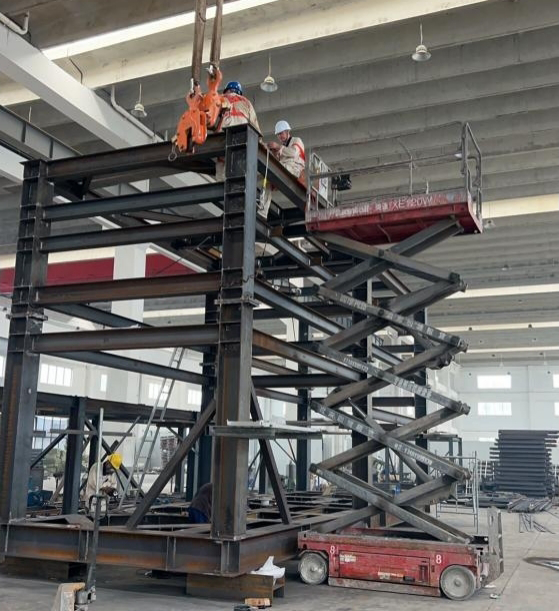
1. Choosing Materials with Appropriate Mechanical Properties
The performance of a heavy machinery frame starts with the materials used in its construction. During operation, these structures may experience considerable static pressure, changing mechanical loads, continuous vibration, and occasional impact. Materials with insufficient mechanical strength or toughness may gradually deform, develop fatigue cracks, or lose their ability to support equipment reliably.
Several types of steel are commonly selected for heavy industrial structures, depending on the application and working environment.
-
Carbon steel: A widely adopted option for machinery frames because it offers a practical combination of mechanical strength, good weldability, and cost efficiency.
-
Alloy steel: Often selected for structures that require higher strength, improved toughness, or enhanced performance under demanding mechanical conditions.
-
Stainless steel: Particularly useful in applications exposed to moisture, salt, corrosive substances, or other environments where corrosion resistance is essential.
When evaluating material suitability, engineers need to examine yield strength, tensile strength, elongation, impact toughness, and welding characteristics. Plate thickness and structural dimensions should also be determined according to the expected load and operating conditions.
Another important consideration is material uniformity. Large welded assemblies may contain multiple plates and structural sections. If their mechanical properties differ significantly, the finished structure could experience inconsistent stress distribution and uneven deformation. Maintaining reliable material quality throughout the fabrication process helps improve structural integrity.
2. Engineering Design and Effective Load Distribution
Material strength alone does not determine whether a machinery frame can remain stable under demanding working conditions. Its structural configuration plays an equally important role because it controls how loads are transferred and distributed throughout the assembly.
Depending on the equipment requirements, heavy-duty structures may incorporate welded box frames, reinforced steel plate constructions, H-beams, angle sections, and rectangular or square steel tubes. Each configuration offers different advantages in terms of bending resistance, torsional stiffness, and overall structural rigidity.
Several engineering considerations are particularly important:
Load-bearing arrangement: Heavy or concentrated loads should be transferred to appropriately designed support sections. Relying on unsupported plate areas can result in localized deformation and excessive stress.
Reinforcement positioning: Internal ribs, stiffening plates, and structural braces can strengthen vulnerable areas and help prevent excessive bending or distortion.
Cross-sectional configuration: Closed structural sections generally offer better resistance to torsional forces than comparable open profiles, making them useful in applications where twisting loads are significant.
Joint and connection design: Welded seams, bolted connections, and equipment mounting points must be properly engineered to ensure reliable force transmission and minimize stress concentrations.
Engineers should also pay close attention to structural openings, lifting locations, mounting holes, and connecting interfaces, as these areas may introduce additional stress into the assembly.
When developing customized heavy machinery frames and large bases, manufacturers should work from the actual equipment specifications, installation conditions, and anticipated operating loads. Standard structural drawings may provide a useful starting point, but they cannot replace application-specific engineering calculations.
3. Welding Processes and Structural Joint Reliability
Welding directly affects the strength and service life of large fabricated structures. Even when the material selection and structural design are appropriate, inconsistent welding practices can introduce defects that compromise the performance of the finished product.
Typical welding problems include porosity, cracks, incomplete penetration, undercutting, and excessive thermal distortion. In machinery exposed to repeated vibration or fluctuating loads, these imperfections can become potential initiation points for fatigue failure.
To maintain consistent welding quality, fabrication manufacturers should establish suitable procedures throughout the welding process:
-
Match the welding method and consumables to the material composition and workpiece thickness.
-
Maintain appropriate welding current, voltage, travel speed, and other process parameters.
-
Thoroughly clean and prepare the joint surfaces before welding.
-
Develop balanced welding sequences to control heat input and minimize structural distortion.
-
Carry out visual examinations and appropriate non-destructive testing when required by the application.
For large fabricated assemblies, controlling the order and direction of welding is particularly important. Uneven heat distribution can cause significant shrinkage, bending, or twisting, potentially affecting the dimensions of the entire structure.
Jiangsu Mancheng Machinery & Equipment Co., Ltd. has developed specialized welding capabilities supported by 3000W laser welding machines and pulse-wave welding equipment. These technologies are suitable for precision welding applications involving aluminum, copper, titanium alloys, and stainless steel. The company's welding technology has also received DNV recognition, supporting its ability to undertake demanding industrial fabrication work.
4. Dimensional Accuracy and Manufacturing Process Control
Structural strength is only one part of the manufacturing requirement. A heavy machinery base must also maintain accurate dimensions and geometrical relationships to ensure that the equipment can be installed and operated correctly.
Dimensional deviations can create various problems. For example, an uneven mounting surface may cause inconsistent equipment support, while incorrectly positioned holes can complicate assembly. Misalignment between welded sections may also introduce unwanted internal stress after installation.
Several fabrication operations have a direct influence on dimensional consistency.
Cutting operations: Laser cutting provides accurate material separation and consistent edge quality, helping reduce dimensional errors during subsequent fabrication.
Forming and bending: Properly controlled bending processes ensure that individual structural sections maintain their specified angles, dimensions, and geometrical profiles.
Precision machining: Mounting surfaces, positioning holes, and reference planes need to meet the required tolerances to ensure accurate equipment installation.
Assembly positioning: Suitable fixtures, measurement procedures, and positioning methods help maintain alignment throughout welding and assembly.
Jiangsu Mancheng Machinery & Equipment Co., Ltd. operates a standardized production facility covering approximately 16,000 square meters. Its cutting workshop is equipped with 12,000W and 6,000W laser cutting machines, a five-axis intersecting-line tube cutting machine, and large-scale sawing equipment. These resources allow the company to process various structural materials, including H-beams, angle steel, round bars, and square and rectangular tubes.
For large industrial components, the company can process square and round tubes with dimensions of up to 650 cm, providing additional manufacturing flexibility for oversized structural assemblies.
5. Structural Rigidity, Vibration Control, and Fatigue Resistance
Vibration is an unavoidable consideration in many heavy industrial applications. Engines, rotating machinery, hydraulic equipment, and moving mechanical assemblies can all generate repeated forces that are transferred to their supporting structures.
If a frame's natural frequency is close to the frequency of an external vibration source, resonance may develop. Under these conditions, vibration levels can increase considerably, potentially causing connection loosening, structural fatigue, and accelerated component wear.
A well-designed frame should therefore account for vibration behavior from the early engineering stage. Common approaches include:
-
Improving overall structural stiffness through suitable section dimensions and reinforcement.
-
Strengthening areas exposed to frequent or repeated mechanical loading.
-
Avoiding unnecessary sharp transitions and structural discontinuities.
-
Maintaining accurate equipment alignment and balanced installation.
-
Evaluating potential vibration and resonance problems during structural design.
Fatigue performance also deserves particular attention. A frame may successfully withstand a high load during an individual test but still develop cracks after experiencing thousands or even millions of repeated loading cycles.
For this reason, structural assessment should consider both peak operating loads and long-term load variations. Welded joints, sharp corners, connection areas, and sections where the direction or magnitude of loading changes should receive particular attention.
6. Foundation Design and On-Site Installation Compatibility
The stability of a heavy machinery base is influenced not only by its own structural characteristics but also by the foundation supporting it. Even a precisely fabricated steel structure may experience operational problems if the installation surface or anchoring arrangement is unsuitable.
An uneven foundation can introduce additional bending stress into the base. Incorrect anchor bolt positioning may prevent accurate installation, while inadequate foundation rigidity can contribute to vibration and equipment alignment problems.
Before fabrication starts, equipment designers and structural manufacturers should confirm several important installation details:
-
Foundation dimensions, flatness, and load-bearing capacity.
-
Anchor bolt locations, sizes, and installation specifications.
-
Required leveling and alignment tolerances.
-
Equipment mounting interfaces and connection positions.
-
Transportation dimensions, lifting requirements, and site installation limitations.
Oversized machinery structures require additional planning because transportation and handling can introduce temporary loads that differ from normal operating conditions.
Lifting lugs, temporary support points, reinforcement arrangements, and modular assembly designs should therefore be considered during the engineering stage. Proper planning helps prevent accidental deformation during transportation, lifting, and final positioning.
7. Corrosion Protection and Surface Treatment
Environmental exposure can gradually reduce the reliability of heavy steel structures, especially when machinery operates outdoors, in coastal areas, or in industrial facilities with aggressive chemical conditions.
Moisture, salt spray, airborne contaminants, and temperature fluctuations can damage unprotected metal surfaces. If corrosion continues unchecked, it may reduce the effective thickness of structural sections and eventually affect their load-bearing capacity.
Depending on the application, common surface preparation and protection methods include sandblasting, industrial painting, and specialized protective coating systems.
The appropriate treatment should be selected according to the material, operating environment, expected service life, and applicable technical requirements. Surface preparation is equally important because oil, rust, dust, and other contaminants can reduce coating adhesion and affect protective performance.
Jiangsu Mancheng Machinery & Equipment Co., Ltd. is equipped with professional large-scale sandblasting facilities capable of accommodating products measuring up to 22 m × 10 m × 6 m. The company also has integrated environmental ventilation facilities and the required environmental assessment qualifications for standardized painting operations.
By incorporating surface preparation and coating processes into its own manufacturing system, the company can reduce the need to transport oversized components between different suppliers. This arrangement also helps improve production coordination and process management.
8. Quality Assurance and Manufacturing Coordination
The structural reliability of a finished product is determined by the consistency of every manufacturing stage. Quality inspection should therefore be integrated into the entire production workflow instead of being treated as a final check before delivery.
A comprehensive quality control process generally includes incoming material inspection, cutting verification, forming checks, welding inspection, machining measurement, surface treatment evaluation, and final dimensional acceptance.
Each operation should follow defined technical procedures and inspection standards. Maintaining production and inspection records also helps manufacturers trace material batches, fabrication parameters, welding information, and quality results when necessary.
Established in 2018, Jiangsu Mancheng Machinery & Equipment Co., Ltd. combines independent product development, large-scale fabrication, and supporting manufacturing services. The company has obtained ISO-standardized management system certification and ASME management system certification.
Its engineering team can independently undertake structural design, manufacturing process development, and production parameter optimization based on customer drawings and relevant industry requirements.
With support from intelligent processing equipment, five-axis machining technology, precision laser processing, and automated welding systems, the company offers coordinated manufacturing services covering multiple stages, from engineering preparation to finished-product delivery.
In addition, its production scheduling and risk management procedures help coordinate customized projects and larger-volume orders. Effective production management can reduce unnecessary process interruptions, improve resource utilization, and support more predictable delivery schedules.
Conclusion
The stability of heavy machinery frames and large bases is determined by a combination of engineering and manufacturing factors. Appropriate material selection provides the necessary mechanical properties, while structural design ensures effective load distribution. Reliable welding and precision machining help maintain structural integrity and dimensional accuracy, and vibration control, foundation compatibility, and surface protection contribute to long-term operating performance.
For industrial equipment manufacturers, selecting a fabrication supplier with comprehensive engineering expertise and suitable production capabilities is an important part of achieving reliable structural components.
Jiangsu Mancheng Machinery & Equipment Co., Ltd. combines large-scale manufacturing resources, advanced laser cutting and forming equipment, specialized welding technology, and integrated surface treatment capabilities to support the production of customized heavy-duty metal structures for marine, railway, aviation, and construction applications.
Through coordinated engineering design, controlled manufacturing processes, and systematic quality management, the company helps equipment manufacturers address demanding requirements for structural strength, dimensional precision, and long-term operational stability.
http://www.nautisynth.com
Jiangsu Mancheng Machinery & Equipment Co., Ltd. -
-
AuthorPosts

- You must be logged in to reply to this topic.