- This topic is empty.
-
AuthorPosts
-
2026-11-23 at 9:31 pm #15355
UV-curable materials are widely used in packaging printing, decorative coatings, digital inkjet, and bonding applications. However, different packaging substrates and production processes require different resin properties. Adhesion to plastic films, pigment dispersion in printing inks, curing depth in dark colors, and flexibility in laminated structures are among the challenges faced by packaging ink and coating manufacturers.
Guangdong Lencolo New Material Co., Ltd., under the Lencolo brand, supplies UV resins, reactive monomers, photoinitiators, and functional additives for packaging-related formulation development. Its product selection focuses on matching materials to substrates, printing methods, curing conditions, and performance requirements.
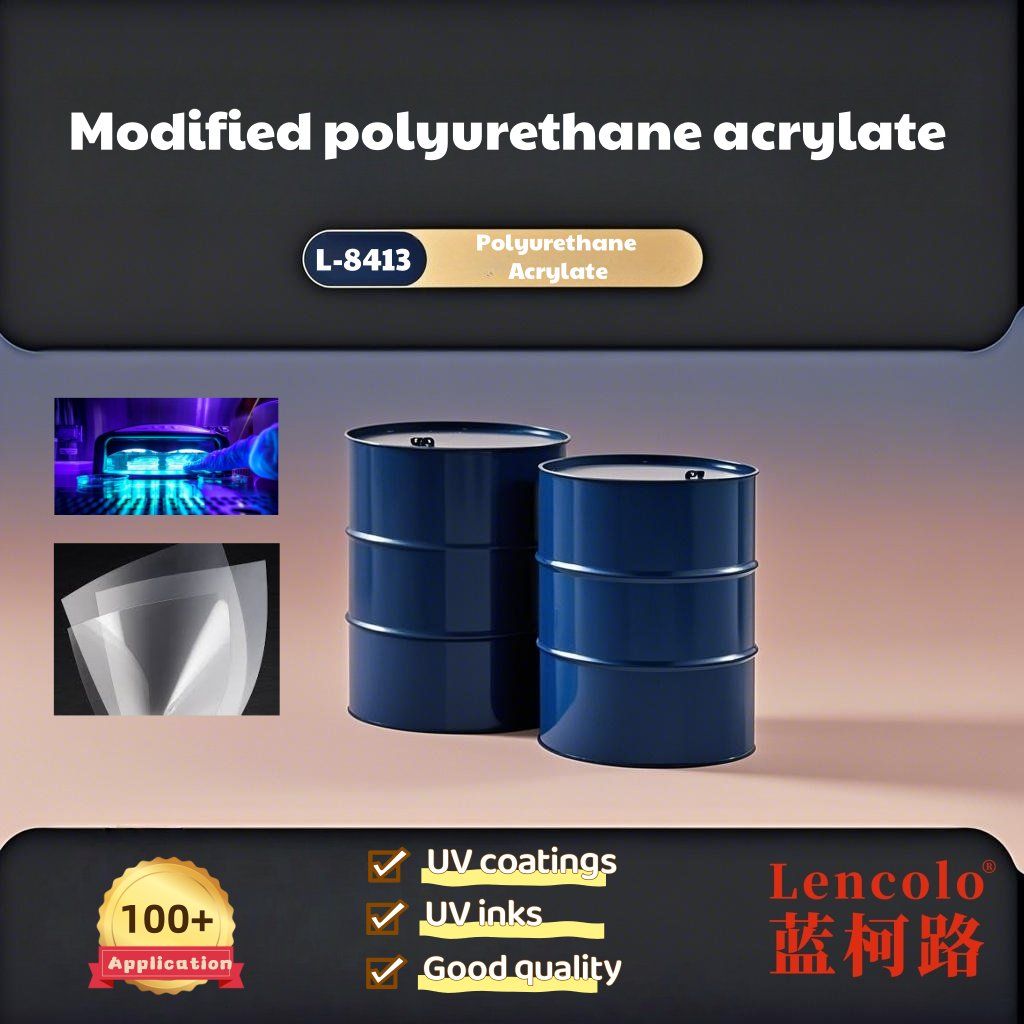
Resin Selection for UV Packaging Inks
UV offset, flexographic, and screen printing inks require different viscosity, rheology, transfer behavior, and film properties. For packaging inks printed on paper, treated films, plastics, or metallized substrates, resin selection influences adhesion, flexibility, pigment wetting, and resistance to rubbing.
Lencolo resin candidates include L-6010, L-6020, L-6030, L-6040, L-6054, L-6055, L-8400A, L-8400C, L-8400D, L-8412A, and L-8412B. These materials can be evaluated according to substrate compatibility and ink formulation requirements.
Reactive monomers such as ACMO, IBOA, THFA, CTFA, HDDA, TPGDA, DPGDA, TMPTA, PETA, and DPHA help formulators adjust viscosity, flexibility, reactivity, and crosslinking density.
Photoinitiator selection is another important factor. Clear formulations and heavily pigmented inks may require different initiation systems. Lencolo offers candidates including 5006, 5007, 5008, 5020, 5025, 5028, 5023, 5027, 5033, and 5040. Their suitability depends on pigment color, film thickness, UV source, and curing requirements.
UV Inkjet Formulation for Packaging
UV inkjet printing requires materials with controlled viscosity, stable pigment dispersion, reliable jetting, and rapid curing. Resin compatibility with the printhead and the overall ink formulation is essential.
Potential resin options include L-6111 and L-6113 epoxy acrylates, polyurethane acrylates L-6212, L-6105, L-6241, and L-61041, as well as polyester acrylates L-6121, L-6126, and L-6129.
For applications involving glass containers or other difficult substrates, L-8400A and L-6106A may be considered for formulations requiring glass or metal adhesion.
Typical inkjet problems include nozzle clogging, pigment sedimentation, unstable jetting, poor adhesion, and incomplete curing. These issues should be investigated through pigment dispersion, viscosity, surface tension, resin compatibility, and photoinitiator selection rather than adjusting one component in isolation.
UV Adhesives for Packaging Bonding
Packaging assembly may also involve film lamination, label bonding, and other adhesive applications. UV adhesive formulations must balance bonding strength, flexibility, shrinkage, transparency, and curing depth.
Lencolo adhesive resin candidates include L-8401 for transparent flexible adhesive systems, L-8406 for flexible bonding, L-8407 for tough adhesive films, and L-8402 for flexible pressure-sensitive adhesive systems. L-8404 and L-8405A may also be evaluated in compatible film-lamination applications.
Substrates such as PET, PP, PVC, BOPP, and paper require careful consideration of surface treatment, adhesive chemistry, light transmission, and bonding conditions. In opaque or shaded structures, UV exposure may be insufficient to achieve complete curing, making process design particularly important.
Application-Based Material Development
Successful UV packaging formulations depend on more than selecting a resin with suitable chemical characteristics. Substrate treatment, printing equipment, coating thickness, pigment loading, curing wavelength, and production speed all influence the final result.
Lencolo provides UV raw materials and application-oriented technical support, including resin selection, monomer and photoinitiator recommendations, TDS and SDS documentation, sample evaluation, and formulation troubleshooting.
For packaging ink manufacturers and converters, matching UV materials to a specific printing or bonding process is a practical starting point for improving adhesion, curing reliability, flexibility, and production consistency. Final performance should always be verified through application testing under actual operating conditions.
https://www.lencolo37.com/
Guangdong Lencolo New Material Co., Ltd. -
AuthorPosts

- You must be logged in to reply to this topic.