- This topic is empty.
-
AuthorPosts
-
2026-11-02 at 3:18 pm #15021
Custom mechanical interlocks are often required when standard products cannot fully meet the operational requirements of an industrial facility. Different valve configurations, operating procedures, installation environments, and safety sequences can all influence the design of a mechanical interlock system. For buyers, providing accurate and complete technical information at the beginning of a project is essential to achieving a practical solution that fits the application.
Whether a project involves a single manually operated valve or a complex arrangement of interconnected valves, the quality of the initial specifications can significantly affect product compatibility, installation efficiency, lead time, and long-term reliability. Incomplete information may result in unnecessary design revisions, compatibility issues, or delays during commissioning.
So, what information should buyers prepare when requesting custom mechanical interlocks? This guide explains the key details that manufacturers need, why each detail matters, and how buyers can prepare a more effective technical inquiry.
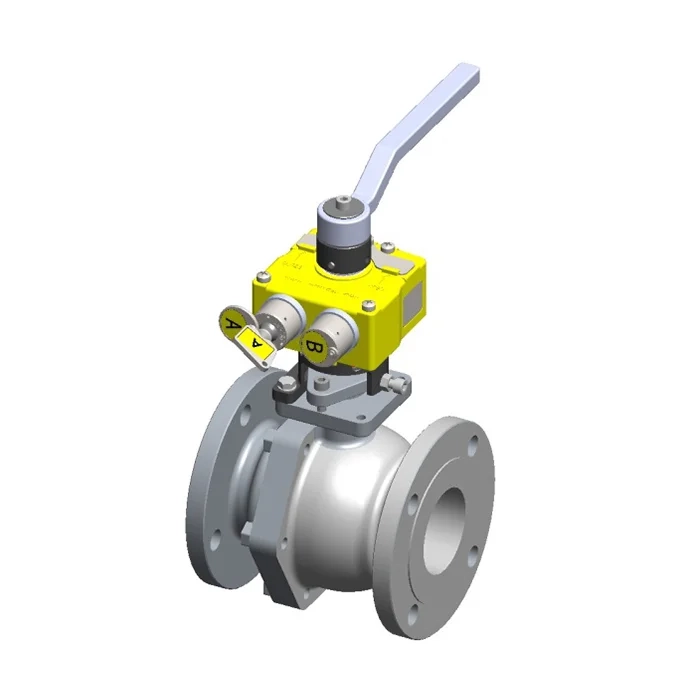
1. Define the Application and Safety Requirements
The first step in specifying custom mechanical interlocks is explaining where and why they will be used. Mechanical interlocks are designed to enforce a predetermined operating sequence by controlling the availability or transfer of keys. Their configuration should reflect the actual operating procedures and safety requirements of the equipment.
Buyers should describe the industrial process, the equipment involved, and the specific operation that the interlock system must control.
For example, a facility may need to prevent two valves from being operated in the wrong sequence, ensure that a valve reaches a designated position before another operation can begin, or require an operator to complete a defined sequence before returning a key to its original position.
Useful information includes:
-
The industry and application, such as chemical processing, oil and gas, water treatment, or general industrial manufacturing.
-
The equipment or process where the interlock will be installed.
-
The operational risks the interlock is intended to address.
-
The actions that must be completed before another operation is permitted.
-
Any relevant operating procedures or site-specific safety requirements.
Providing this background helps the manufacturer understand the purpose of the mechanical interlock rather than simply supplying a product based on its physical dimensions.
It is also important to distinguish between the desired safety function and the preferred product configuration. Buyers may initially request a particular type of interlock, but the manufacturer's technical team may identify a more suitable arrangement after reviewing the operating sequence and installation conditions.
2. Provide Detailed Information About the Valves
Valve information is one of the most important parts of a custom mechanical interlock inquiry. Even when two valves perform similar functions, their dimensions, operating mechanisms, and mounting arrangements may differ considerably.
A mechanical interlock must be compatible with the actual valve assembly and its method of operation. Therefore, buyers should provide the valve specifications for every valve included in the project.
Valve type and model
Start by identifying the valve type, manufacturer, and model wherever possible. Common examples include:
-
Ball valves
-
Butterfly valves
-
Gate valves
-
Globe valves
-
Plug valves
Buyers should also indicate whether each valve is manually operated through a lever, handwheel, gearbox, or another manual mechanism.
This distinction matters because the interlock must interact with the relevant operating mechanism. A design suitable for a manually operated ball valve may not be appropriate for a large gate valve with a gearbox or a butterfly valve with a different mounting arrangement.
When multiple valves are involved, prepare a separate list for each valve rather than assuming that identical valve types have identical configurations.
Valve dimensions and operating details
Depending on the application, useful technical details may include:
-
Nominal valve size and pressure rating.
-
Valve manufacturer and model number.
-
Lever, handwheel, or gearbox dimensions.
-
Shaft dimensions and operating direction.
-
Available mounting points.
-
Required operating positions.
-
Clearance around the operating mechanism.
Not every project requires every dimension, but providing available manufacturer drawings or dimensional specifications can help reduce uncertainty during the design process.
For example, the space available around a valve handle may determine how the interlock can be mounted. If a nearby pipe, structural support, or instrument restricts access, the manufacturer may need to consider a different mounting arrangement.
A key point for buyers: Do not provide only the valve's nominal size. The interlock's compatibility often depends on the actual operating mechanism and installation geometry, not just the pipe diameter.
3. Explain the Required Operating Sequence
Mechanical interlocks are frequently used to enforce a defined sequence of operations. For custom projects, explaining this sequence clearly is just as important as providing valve dimensions.
A manufacturer needs to understand which operation is permitted first, what condition must be satisfied before the next operation, and how the key should move through the system.
Consider a simplified example involving two manually operated valves. The operating procedure may require Valve A to be closed before Valve B can be opened. The mechanical interlock configuration must be designed around that required sequence, including the relevant valve positions and key-transfer conditions.
Buyers should clarify:
-
Which valve or operation must occur first.
-
Which valve positions permit key release or transfer.
-
Which operations must remain restricted under certain conditions.
-
Whether the sequence is one-way or includes a defined return procedure.
-
Whether operators must complete additional steps before the system can be reset.
Avoid describing the requirement only in general terms such as "improve safety" or "prevent incorrect operation." These statements explain the objective but do not define the actual sequence the interlock must enforce.
Use a sequence diagram when possible
A simple flowchart or key-transfer diagram can make complicated requirements easier to understand.
For example, a buyer might illustrate the intended sequence as follows:
-
Confirm that Valve A is in the required position.
-
Release the designated key.
-
Use the released key to permit the specified operation at Valve B.
-
Complete the required operation at Valve B.
-
Return or transfer the key according to the defined procedure.
This is only an illustrative sequence. The actual key movements, release conditions, and permitted valve positions must be established for the specific application.
For projects involving several valves, a sequence diagram is especially valuable because it helps the manufacturer identify the number of keys, interlock points, and mechanical dependencies that may be required.
4. Specify the Number of Interlocks and Keys
The number of interlocks and keys affects the configuration, complexity, and cost of a custom mechanical interlock system.
Buyers should identify how many valves or operating points need to be controlled and whether these points must operate independently or as part of a coordinated sequence.
Relevant details include:
-
Total number of valves involved.
-
Number of interlock units required.
-
Number of keys needed for each operating stage.
-
Whether keys are transferred between interlock points.
-
Whether certain keys must remain trapped until a specific condition is met.
-
Whether several operating sequences must be coordinated.
A single-valve application may require a relatively straightforward configuration. A multi-valve system, however, may involve several key-transfer stages and dependencies between different operating points.
For example, a process with three manually operated valves might require a specific order of operation rather than allowing each valve to be operated independently. The manufacturer needs to understand the complete sequence before recommending the appropriate mechanical interlock arrangement.
Buyers should also clarify whether the requested quantity refers to the number of complete systems, individual interlock units, replacement components, or spare keys. This prevents misunderstandings during quotation and order confirmation.
5. Describe the Installation Environment
The operating environment can influence the materials, mounting method, and protective features required for custom mechanical interlocks.
A system installed indoors in a clean production area may face different conditions from one installed outdoors or in a humid industrial facility. Buyers should describe the actual environment as accurately as possible.
Environmental conditions to consider
Important details may include:
-
Indoor or outdoor installation.
-
Ambient temperature range.
-
Humidity and potential condensation.
-
Exposure to rain, dust, or airborne particles.
-
Contact with corrosive substances.
-
Exposure to cleaning chemicals.
-
Vibration or mechanical impact.
-
Requirements for washdown or routine cleaning.
For installations in corrosive or humid environments, buyers should explain the type and severity of exposure. This helps the manufacturer evaluate suitable material and surface-finish options.
Similarly, if the interlock will be installed in a food-processing facility, a chemical plant, or another environment with specific cleaning procedures, those conditions should be communicated before the design is finalized.
Do not assume that a standard material or finish will be suitable for every industrial application. The appropriate choice depends on the environment, maintenance practices, and service requirements.
6. Provide Mounting and Space Requirements
Even a mechanically suitable interlock may be difficult to install if the mounting arrangement is not considered early enough.
Buyers should provide information about the available installation space, nearby equipment, and preferred mounting position. Photographs and technical drawings are particularly helpful when the installation area is difficult to describe in words.
Useful materials include:
-
Photographs showing the valve and surrounding equipment.
-
General arrangement drawings.
-
Valve assembly drawings.
-
Mounting dimensions and hole positions.
-
Information about nearby pipes, brackets, or structural supports.
-
Available clearance for operator access.
-
Any restrictions on drilling, welding, or modifying existing equipment.
Buyers should also explain whether the interlock will be fitted to new equipment or retrofitted to an existing installation.
For a new project, the mounting arrangement may be incorporated into the equipment design from the beginning. For a retrofit, the manufacturer may need to work within existing dimensions and avoid modifications that could affect the valve or surrounding structure.
Providing these details early helps reduce the risk of receiving a custom mechanical interlock that requires unexpected modifications during installation.
7. Identify Material and Durability Requirements
Material selection should reflect the expected service conditions and the required service life of the interlock.
Buyers do not necessarily need to specify every material independently. However, they should communicate any requirements related to corrosion resistance, mechanical durability, maintenance, or compatibility with the installation environment.
For example, a buyer may need a mechanical interlock for an outdoor valve station exposed to moisture, or a system installed in an industrial area where cleaning chemicals are used regularly.
The inquiry should identify any relevant requirements concerning:
-
Corrosion resistance.
-
Mechanical wear.
-
Surface treatment.
-
Environmental exposure.
-
Expected operating frequency.
-
Maintenance accessibility.
-
Replacement and spare-part availability.
Operating frequency is particularly useful information. An interlock used several times per day may experience different wear patterns from one used only during periodic maintenance or process changes.
Where a project has a defined service-life expectation or maintenance schedule, buyers should share it with the manufacturer. The manufacturer can then evaluate whether the proposed design and materials are appropriate for the intended use.
8. Clarify Whether the Valves Are Manually Operated
The operating method deserves specific attention because custom mechanical interlocks must be designed around how the equipment is actually controlled.
For a manual mechanical interlock, buyers should confirm that the relevant valve operation is performed through a hand lever, handwheel, gearbox, or another compatible manual mechanism.
If the valve assembly includes an electric, pneumatic, or hydraulic actuator, that information must also be disclosed. An interlock designed for manual operation should not automatically be assumed to prevent actuator-driven movement.
Where actuated equipment is involved, the manufacturer and the responsible engineering team must determine whether the proposed mechanical interlock can fulfill the intended safety function within the complete system. Additional engineered safeguards or a different control arrangement may be necessary.
Buyers should therefore provide a clear description of the valve's operating mechanism rather than simply identifying it as a ball valve, gate valve, or butterfly valve.
This information helps prevent a mismatch between the requested product and the actual operating requirements.
9. State the Required Standards and Documentation
Industrial projects may be subject to internal engineering specifications, customer requirements, industry standards, or site-specific approval procedures.
Buyers should identify any applicable requirements before the design and quotation are finalized.
Depending on the project, requested documentation may include:
-
Product drawings and dimensional specifications.
-
Installation instructions.
-
Operation and maintenance documentation.
-
Material information.
-
Inspection records.
-
Relevant conformity or test documentation, where applicable.
-
Project-specific technical submittals.
If a project requires compliance with a particular standard, the buyer should provide the exact standard and explain the scope of the requirement. Avoid assuming that every mechanical interlock automatically meets every industrial safety standard.
It is also useful to distinguish between mandatory requirements and preferences. For instance, a customer may require a particular document for formal approval but merely prefer a certain surface finish.
Clarifying these expectations at the inquiry stage helps manufacturers assess feasibility and prepare the appropriate documentation.
Conclusion
Ordering custom mechanical interlocks requires more than identifying a valve type and requesting a quotation. Buyers should provide a clear description of the application, valve specifications, operating sequence, key requirements, installation environment, mounting constraints, material expectations, documentation needs, and commercial schedule.
The most useful inquiry combines technical drawings, photographs, dimensional information, and a clear explanation of the intended operating procedure. If some details are not yet available, buyers should identify the missing information rather than making assumptions about compatibility or functionality.
Working closely with an experienced manufacturer can help buyers evaluate these requirements, clarify design constraints, and develop a mechanical interlock solution suited to the actual installation. For projects involving manually operated industrial valves, Nudango supports buyers seeking manual mechanical interlock solutions tailored to specific equipment configurations and operating sequences. Providing complete project information at the beginning helps establish a clearer technical scope and supports a more efficient path from initial inquiry to final installation.
http://www.nudango.com
nudango -
-
AuthorPosts

- You must be logged in to reply to this topic.