- This topic is empty.
-
AuthorPosts
-
2026-11-02 at 10:39 am #15019
Searches for the top eSIM industrial 4G router manufacturers usually come from buyers who have already decided that eSIM makes sense for their fleet and now need a supplier who can deliver it properly. Lists of brand names are easy to find but rarely explain what actually separates a strong manufacturer from a weak one in this specific area.
This article takes a different approach. Instead of ranking companies, it sets out eight traits that the strongest eSIM industrial 4G router manufacturers share, explains why each matters, and then shows, trait by trait, how E-Lins measures up today.
Trait 1: They State the eSIM Specification Clearly
Remote SIM provisioning follows different specifications: the network-driven M2M model (SGP.02), the consumer model with a user-facing assistant (SGP.22), and the IoT model for devices without a user interface (SGP.32), which uses a network-side remote manager and does not depend on SMS. Strong manufacturers say exactly which model each router variant supports and with which platforms it has been tested. Vague statements such as “eSIM ready” are a warning sign.
Trait 2: They Combine eSIM With Physical SIM Options
Industrial customers rarely want a single point of dependency. Leading designs pair an embedded SIM with one or two physical SIM slots, so a site can fall back to a local card or use a second operator.
Trait 3: They Deliver Per-Unit Records
Every router’s serial number should be linked to its eSIM identifier and initial profile in a file that can be imported into the customer’s platforms. Strong manufacturers treat this as a standard deliverable.
Trait 4: They Maintain Device-Side Software
eSIM platforms evolve. The router’s firmware, including its eSIM-related functions, must be maintained for years. Manufacturers that develop their own firmware are best placed to do this.
Trait 5: They Do Not Neglect the Industrial Basics
eSIM only decides how a router obtains its profile. Staying online still depends on temperature tolerance, protected power, recovery mechanisms, and secure tunnels. Strong eSIM manufacturers are strong industrial router manufacturers first.
Trait 6: They Offer Fleet Management
Support teams need to see device health and connectivity in one place, through standard protocols and a manufacturer platform.
Trait 7: They Support Global Deployment
eSIM is most valuable for multi-country fleets, so the manufacturer must offer the right band variants and certifications for each market, and support across time zones.
Trait 8: They Can Customise
When no standard variant fits, the manufacturer should be able to adapt hardware and firmware, for example, adding eSIM to a specific form factor or changing the SIM arrangement.
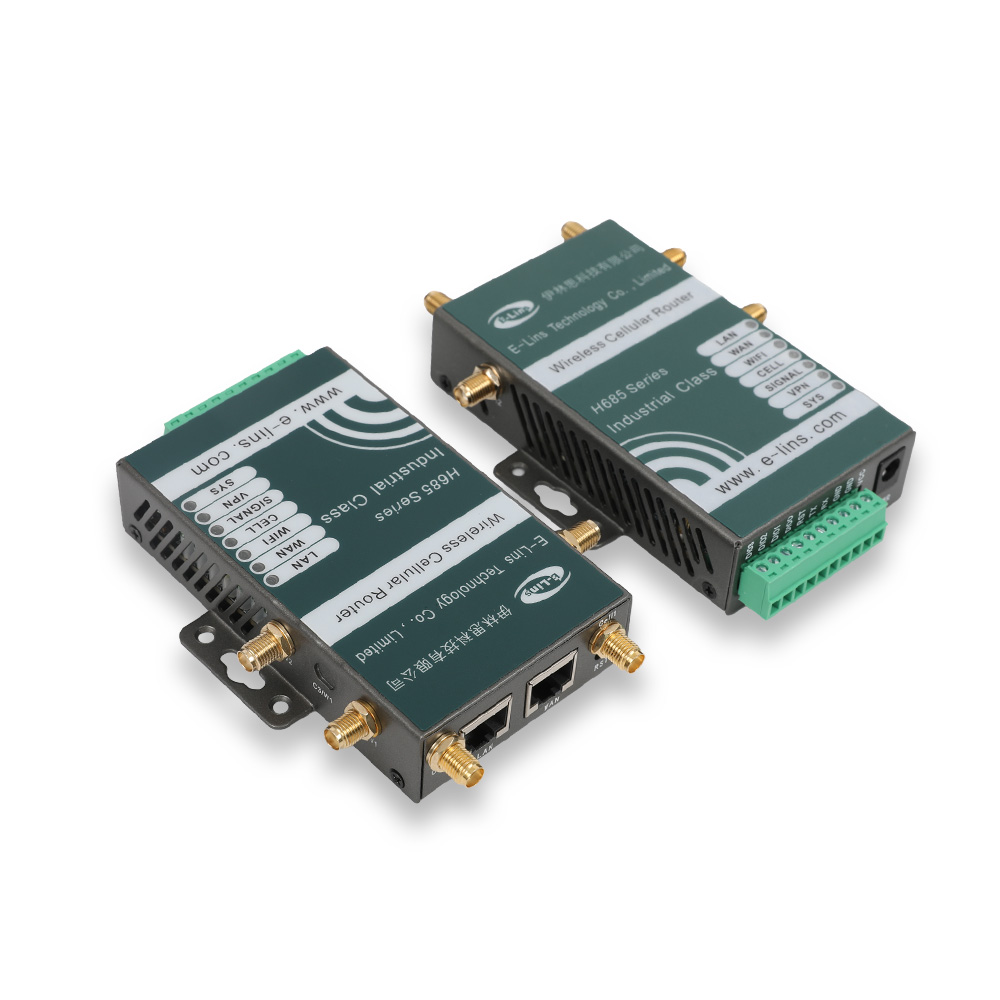
Where E-Lins Stands, Trait by Trait
Trait
E-Lins position
Buyer action
1. Clear eSIM specification
eSIM listed among the features of the E-Lins IoT 4G router range
Confirm the supported specification for the exact 4G variant
2. eSIM plus physical SIM
Already combined on 5G models H900pf and H900uf (dual SIM plus eSIM); 4G H900t offers dual SIM; H700 and H750tt offer dual LTE with dual SIM
Confirm which 4G variants combine eSIM with physical slots
3. Per-unit records
In-house SMT production and assembly in Shenzhen
Agree on the record format before ordering
4. Device-side software
Firmware developed 100% in-house; lifetime free firmware upgrades
Confirm how eSIM functions are maintained in updates
5. Industrial basics
-35°C to +75°C components, 15KV ESD, 1.5KV isolation, watchdog and link self-healing, online rate of 99.5% or higher
Verify in a pilot
6. Fleet management
TR-069, SNMP, SSH, and the E-Lins NMS cloud platform with remote firmware upgrades
Check which eSIM data the platform shows
7. Global deployment
Customers in 150+ countries and regions; CE, FCC, UKCA and RoHS; 7×24 support
Confirm band variants per market
8. Customisation
OEM and ODM covering hardware structure, interface layout and firmware behaviour
Specify eSIM needs in the brief if no standard variant fits
E-Lins is strongest on the industrial basics, firmware ownership, management, global reach and customisation. For eSIM-specific points, buyers should confirm details for the exact 4G variant, as they should with any manufacturer.
Why the Industrial Basics Weigh So Heavily
It is tempting to judge an eSIM router mainly on its eSIM features. In practice, most field problems in industrial fleets come from heat, power, interference, and software lock-ups, not from SIM provisioning. E-Lins’s documented results show what strong basics deliver: a 99.4% online rate across 100,000 units for a leading Indian telecom operator in heat up to 48°C and unstable power; 99.9% or higher on airport aprons for a European ground support equipment manufacturer; and network interruption at 0.3% for a Nordic public transport provider in winters down to -32°C.
Common Mistakes When Choosing an eSIM Router Manufacturer
Judging on the word “eSIM” alone. Two routers labelled eSIM can support different specifications and behave very differently in the field.
Ignoring the connectivity partner. The router and the profile platform must work together. Involve your connectivity provider in the manufacturer evaluation from the start.
Dropping physical SIM support too early. A physical slot costs little and can save a site when remote provisioning runs into trouble.
Underestimating firmware lifetime. eSIM functions live in the router’s software, which must be maintained for the life of the fleet.
Forgetting band planning. If the router may switch operators later, its module must support the bands of every network it might use.
Where eSIM Fits in a Mixed Fleet
Few fleets switch to eSIM overnight. A practical approach is to introduce eSIM-capable routers on new sites or new countries first, keep physical SIMs in the existing installed base, and manage both from the same platform. A manufacturer whose range spans physical SIM, dual SIM, dual LTE and eSIM options, under one firmware platform and one management system, makes that gradual transition easier to run.
Using the Eight Traits
Shortlist manufacturers that can show strength on traits 5 to 8, the industrial and organisational foundations.
Probe traits 1 to 4 in writing for the exact variant you intend to buy.
Pilot with your connectivity provider, switching profiles at least once and testing recovery after power cuts.
Decide on documented answers and pilot results, not on lists.
A Short Checklist to Take Away
Before shortlisting any eSIM industrial 4G router manufacturer, make sure you can answer five questions from its written replies: which eSIM specification each variant supports; whether a physical SIM slot is retained; what per-unit records you will receive; how long firmware, including eSIM functions, will be maintained; and what field evidence shows its routers staying online in conditions like yours. If any answer is missing, ask again before moving on.
About E-Lins
Shenzhen E-Lins Technology Co., Ltd. has built industrial cellular equipment since its industrial roots in 1999, moving from 2G and 3G industrial modems through 4G LTE to 5G NR routers and edge computing gateways. It produces in its own SMT factory and assembly lines in Shenzhen under ISO 9001 and ISO 14001, and supports customers with 7×24 remote technical support, an average response time of 10 minutes during business hours, and a reported 90% remote resolution rate. For buyers looking for the top eSIM industrial 4G router manufacturers, the eight traits above are a fairer basis for comparison than any ranking.
https://e-lins.com/
Shenzhen E-Lins Technology Co., Ltd. -
AuthorPosts

- You must be logged in to reply to this topic.