- This topic is empty.
-
AuthorPosts
-
2026-11-05 at 4:14 pm #15064
Space maintainer fabrication requires more than bending a wire to span an extraction site. The appliance must preserve the intended space, fit the supporting teeth, avoid unnecessary interference with soft tissue and occlusion, and accommodate the eruption of the permanent successor. Even small errors in band adaptation or loop positioning can result in additional chairside adjustments, delayed delivery, or a remake. For dental laboratories serving multiple clinics, these issues become particularly important when cases arrive with different record formats, prescription styles, and turnaround expectations.
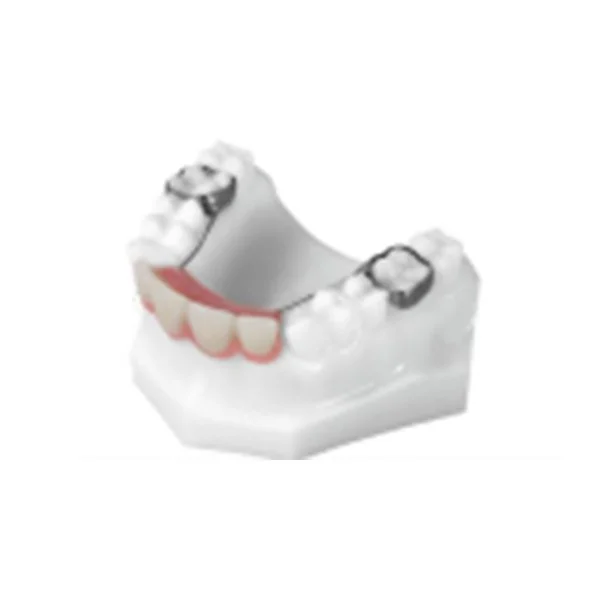
Digital dentistry offers a way to improve the transfer of clinical information into laboratory production. Intraoral scanning, digital model review, CAD-based design, and suitable manufacturing technologies can make case information easier to inspect and manage. Yet digitalization is not automatically equivalent to accuracy. The quality of the scan, completeness of the prescription, suitability of the design, and verification of the finished appliance remain essential. A reliable space maintainer workflow combines digital tools with clinical understanding and disciplined quality control.
Why Space Maintainer Accuracy Matters
A space maintainer is designed to preserve the relative position of existing teeth while a permanent tooth develops and erupts. If a primary tooth is lost prematurely, adjacent teeth may drift into the vacant space, reducing the room available for the permanent successor. The amount of potential space loss varies according to the tooth involved, dental development, the existing occlusion, and the time elapsed since tooth loss. The American Academy of Pediatric Dentistry recommends considering these clinical factors when evaluating whether space maintenance is appropriate.
From a laboratory perspective, the key challenge is translating the intended clinical function into an appliance with appropriate dimensions and positioning. A band that does not seat properly may compromise retention. A loop that is too short or incorrectly positioned may fail to maintain the required space. Excessive extension toward the gingiva can irritate tissue, while interference with the bite can affect function and require adjustment. These problems may arise even when the appliance appears acceptable on a working model if the records do not accurately represent the clinical situation.
The laboratory therefore needs to treat each case as a prescription-driven manufacturing task. The objective is not simply to reproduce a standard appliance shape, but to fabricate the specified design according to the supplied records and clinical requirements.
Traditional Impressions and Digital Scans
Conventional space maintainer production commonly begins with an impression that is used to create a physical model. The laboratory adapts a band to the supporting tooth, fabricates the wire components, and assembles the appliance according to the prescription. This established workflow remains useful, particularly where clinics prefer physical impressions or digital scanning is unavailable.
However, physical impressions can introduce handling and transfer variables. Distortion, incomplete recording of tooth contours, damage during shipping, or errors during model pouring may affect the accuracy of the working model. If a critical area is unclear, the technician may need to request a new impression or rely on additional communication with the clinic.
Digital impressions change how case information is captured and transferred. An intraoral scanner creates a digital representation of the dentition that can be sent to the laboratory for review. The laboratory can inspect the recorded tooth surfaces and adjacent structures on screen, retain digital records for reference, and use compatible software to support design planning. A published clinical report has demonstrated a digital workflow involving intraoral scanning, CAD design, and CAM fabrication for a customized tooth-colored space maintainer. This shows the potential of digital workflows, although the choice of material and process must remain appropriate to the individual case.
Digital scanning does not eliminate every source of error. Incomplete scans, missing contact areas, movement during scanning, or poor visibility around the supporting teeth can limit the usefulness of the model. A laboratory should have a defined process for checking whether the received file contains enough information to proceed. If the scan is incomplete or the prescription is ambiguous, clarification should take priority over manufacturing.
CAD Design: Turning Clinical Records into a Manufacturable Appliance
Computer-aided design can help standardize how appliance geometry is reviewed and prepared for production. Depending on the appliance type and the available software, a digital workflow may support inspection of the edentulous space, evaluation of the supporting tooth, and planning of component placement. The aim is to reduce avoidable interpretation differences and identify potential design conflicts before the appliance is manufactured.
For a band-and-loop space maintainer, the main design considerations include the dimensions of the space, the shape and position of the band, the path of the loop, and clearance from adjacent teeth and soft tissue. For a bilateral appliance, the relationship between the supporting teeth and the connecting wire must also be considered. These dimensions should be based on the clinical records and prescription, not on a fixed template applied to every patient.
CAD-based planning can also improve communication. When a case contains an unusual tooth contour or a specific design requirement, digital images or design views may help the laboratory and clinic clarify the intended result before production. This is especially useful for complex or repeat cases, where a documented design history can support consistency. However, the clinician remains responsible for treatment planning and confirming that the prescribed appliance is appropriate for the patient.
Choosing a Manufacturing Method
The manufacturing method should follow the appliance design and the material’s intended use. Conventional fixed space maintainers commonly use metal bands and wire components, with the loop assembled and joined according to the laboratory’s established process. The finished appliance must provide suitable rigidity and retention while remaining compatible with the prescribed clinical design.
Digital manufacturing may involve different methods depending on the material and appliance type. CAD/CAM milling and 3D printing can support the production of certain customized dental appliances, but they are not interchangeable with every conventional wire-and-band workflow. Material properties, required strength, manufacturing tolerances, finishing requirements, and clinical evidence must all be considered before a process is selected.
A study comparing traditional, prefabricated, and 3D-printed band-and-loop space maintainers illustrates the growing interest in alternative production methods. Such research should be interpreted in context: results from a specific design, material, or study population do not establish that one manufacturing method is superior for every clinical indication.
For a laboratory, the practical question is whether the chosen process can consistently deliver the prescribed geometry, material performance, and fit. Production speed matters, but it should not come at the expense of dimensional accuracy or final inspection.
Quality Control: From Incoming Records to Finished Appliance
An effective quality-control process begins before manufacturing. Incoming records should be checked for completeness, correct patient and arch identification, a clear appliance prescription, and sufficient detail to determine the requested design. Where applicable, the laboratory should confirm the specified material, supporting tooth, appliance type, and any special clinical instructions.
During fabrication, critical checks depend on the appliance. For a band-and-loop design, these include band adaptation, loop length and contour, joint integrity, and clearance around the intended space. For a bilateral appliance, the connecting components and their relationship to the supporting teeth require attention. All designs should be finished carefully to avoid rough surfaces and sharp edges.
The final inspection should confirm that the appliance corresponds to the prescription and that no visible defects or unwanted deformation are present. The laboratory should not substitute its own clinical judgment for the treating clinician’s decision. Instead, it should identify production issues, document relevant limitations, and request clarification when the records do not support reliable fabrication.
The clinical team must then assess seating, retention, occlusion, soft-tissue clearance, and the appliance’s compatibility with the patient’s developing dentition before use. Follow-up remains necessary because bands can loosen, components can break, and the eruption of permanent teeth can change the need for space maintenance.
How Digital Support Can Improve Laboratory–Clinic Coordination
A digital workflow creates value when it improves the entire case pathway rather than only the manufacturing stage. Clear digital records can reduce the need to ship physical models, support earlier review of incomplete cases, and make communication about design details more efficient. A consistent intake process can also help clinics understand which records are required and what information must accompany a prescription.
Jiahong Dental Laboratory was founded in 1999 and has developed its capabilities across digital denture production, research and development, medical management consulting, equipment sales, and clinical treatment. Its digitized center, established in 2012 and expanded into a CAD/CAM center in 2018, introduced technologies including 3D printing, digital cutting, and milling equipment. The company’s digital support team also provides oral scanning equipment services and precise positioning support for implant-related workflows.
For space maintainer production, this broader digital experience is relevant to the integration of clinical information and laboratory manufacturing. It provides a basis for discussing digital case submission, record quality, and workflow coordination with overseas partners. Specific space maintainer designs, materials, and available production methods should be confirmed directly with the laboratory according to the case requirements.
Evaluating a Space Maintainer Laboratory Partner
A capable laboratory partner should be evaluated on more than price or quoted turnaround time. Case acceptance requirements should be clear, digital files should be reviewed systematically, and questions about incomplete prescriptions should be raised before fabrication. Quality-control procedures should address appliance fit and component integrity, while communication should make it easy to resolve discrepancies without unnecessary delays.
It is also useful to clarify which appliance designs the laboratory supports, whether it accepts intraoral scans or physical impressions, what file formats are compatible with its digital workflow, and how it handles remakes or adjustments when a manufacturing issue is identified. These details help clinics establish realistic expectations and reduce friction across repeated cases.
Conclusion
Digital dentistry can improve space maintainer fabrication by making clinical records easier to transfer, supporting design review, and creating a more traceable production workflow. Its benefits depend on accurate scans, complete prescriptions, appropriate manufacturing methods, and consistent quality control. Conventional and digital approaches each have a role, and the best process is the one that meets the clinical specification reliably.
For dental practices and laboratories working across different regions, effective collaboration is as important as equipment. With its experience in digital dental production and CAD/CAM technology, Jiahong Dental Laboratory can draw on an established digital manufacturing environment when coordinating case records and production requirements. Ultimately, successful space maintainer delivery depends on the combination of clear clinical instructions, precise fabrication, and ongoing professional monitoring.
http://www.jiahongdentallab.com
Shenzhen Jiahong Dental Technology Co., Ltd. -
AuthorPosts

- You must be logged in to reply to this topic.