- This topic is empty.
-
AuthorPosts
-
2026-05-20 at 11:30 am #13034
LED lighting has revolutionized the automotive and off-road lighting industries, offering superior brightness, energy efficiency, and longevity compared to traditional halogen systems. However, despite these advantages, LED lights are not immune to failures. Understanding common failure modes and their solutions is essential for manufacturers, distributors, and end-users seeking reliable lighting performance in demanding environments.
Understanding Critical LED Lighting Failure Points
The automotive LED lighting industry faces several recurring technical challenges that compromise product reliability and customer satisfaction. These failures often stem from fundamental design flaws rather than component quality alone.
Waterproofing Failures: The Industry’s Achilles Heel
One of the most prevalent issues in LED light bars involves waterproof seal failures. Industry analysis reveals that standard light bar designs often feature Lexan lenses that bend after assembly, creating gaps that allow moisture infiltration. This structural weakness becomes apparent under extreme pressure conditions, particularly in off-road and marine applications where lights face constant exposure to water, mud, and environmental contaminants.
The consequences of waterproof failures extend beyond simple moisture damage. Water ingress leads to corrosion of electrical connections, short circuits, and rapid degradation of LED chips. In extreme cases, trapped moisture can cause complete system failure within months of installation, despite manufacturers claiming IP67 or IP68 ratings.
Thermal Management Deficiencies
Heat dissipation represents another critical failure point in LED lighting systems, particularly in high-output applications. LED headlight bulbs generating 100W or more face significant thermal challenges. Inadequate heat management causes LED chips to operate above their optimal temperature range, resulting in accelerated lumen depreciation, color shift, and shortened lifespan.
Standard cooling approaches using basic aluminum heatsinks and small fans often prove insufficient for high-wattage applications. When thermal conductivity falls below 500w/mk, heat accumulates at the LED junction, causing performance degradation that manifests as dimming, flickering, or complete failure.
Optical Efficiency and Beam Pattern Issues
Many LED lights suffer from poor optical design, resulting in inefficient light distribution and suboptimal beam patterns. Standard reflector and lens systems achieve only 85-90% light efficiency, wasting valuable lumens. Additionally, improper beam patterns create dangerous glare for oncoming traffic or fail to provide adequate illumination at distance for off-road applications.
The challenge intensifies with plug-and-play LED headlight bulbs, where precise alignment becomes critical. Bulbs with fixed sockets cannot accommodate vehicle-specific variations, resulting in misaligned beam patterns that reduce visibility and compromise safety.
Electrical and Component Reliability
PCBA (Printed Circuit Board Assembly) failures represent a significant reliability concern. Inferior substrate materials with low thermal conductivity accelerate component degradation. Solder joint failures, capacitor burnout, and driver circuit malfunctions commonly occur in LED lights using substandard manufacturing processes.
Corrosion represents another critical concern, especially for marine and coastal applications. Standard LED housings lack protective coatings against saltwater and UV exposure, leading to rapid deterioration of both housing materials and internal components.
Engineering Solutions for Enhanced Reliability
Addressing these failure modes requires fundamental design improvements rather than incremental component upgrades. Advanced manufacturers have developed innovative solutions that target root causes.
Structural Waterproofing Redesign
Effective waterproofing begins with housing design that prevents lens deformation under assembly pressure. By redesigning the housing structure to maintain perfect seal integrity, manufacturers can achieve genuine IP68 and IP69K waterproof ratings that withstand extreme pressure testing. This approach ensures long-term seal integrity even under harsh environmental conditions including submersion, high-pressure washing, and freeze-thaw cycles.
Advanced Thermal Management Systems
Superior heat dissipation requires multi-layered approaches combining high-conductivity materials with active cooling. Vacuum sintered copper tube technology achieves thermal conductivity exceeding 1000w/mk, enabling efficient heat transfer from LED junctions to external heatsinks. When combined with dual liquid cooling systems and optimally-sized cooling fans (32mm or larger), these systems maintain LED junction temperatures within optimal ranges even at 100W output levels.
High-conductivity copper substrates with ratings of 401w/mk or higher provide the foundation for effective thermal management. Double-sided copper PCBA designs facilitate rapid heat spreading, preventing hot spots that accelerate component degradation.
Precision Optical Engineering
Advanced optical systems using AR (Anti-Reflective) coatings achieve over 97% light efficiency, maximizing usable lumens. Precision-engineered reflectors and lens systems create optimized beam patterns that project light effectively over long distances—achieving 1 lux at 1300 meters for driving applications—while minimizing glare and wasted light.
For replacement headlight bulbs, 360-degree adjustable metal sockets enable precise beam pattern alignment regardless of vehicle-specific variations, ensuring optimal visibility and regulatory compliance.
Manufacturing Excellence and Quality Control
Preventing LED failures requires rigorous manufacturing standards throughout the production process. First-class CNC machining ensures precise component tolerances, while high-efficiency SMT production using advanced equipment enables consistent solder joint quality. X-ray inspection systems verify chip placement and internal connection integrity, while reflow ovens with precise temperature profiles prevent thermal stress damage during assembly.
IATF 16949 and ISO 9001 quality management systems provide the framework for consistent manufacturing excellence, ensuring every unit meets stringent performance and reliability standards.
The Innovation Advantage
Companies investing in proprietary research and development create fundamental advantages in addressing LED failure modes. Organizations holding extensive patent portfolios—over 200 patents covering design, innovation, and appearance—demonstrate sustained commitment to solving industry challenges through engineering excellence rather than cost-cutting compromises.
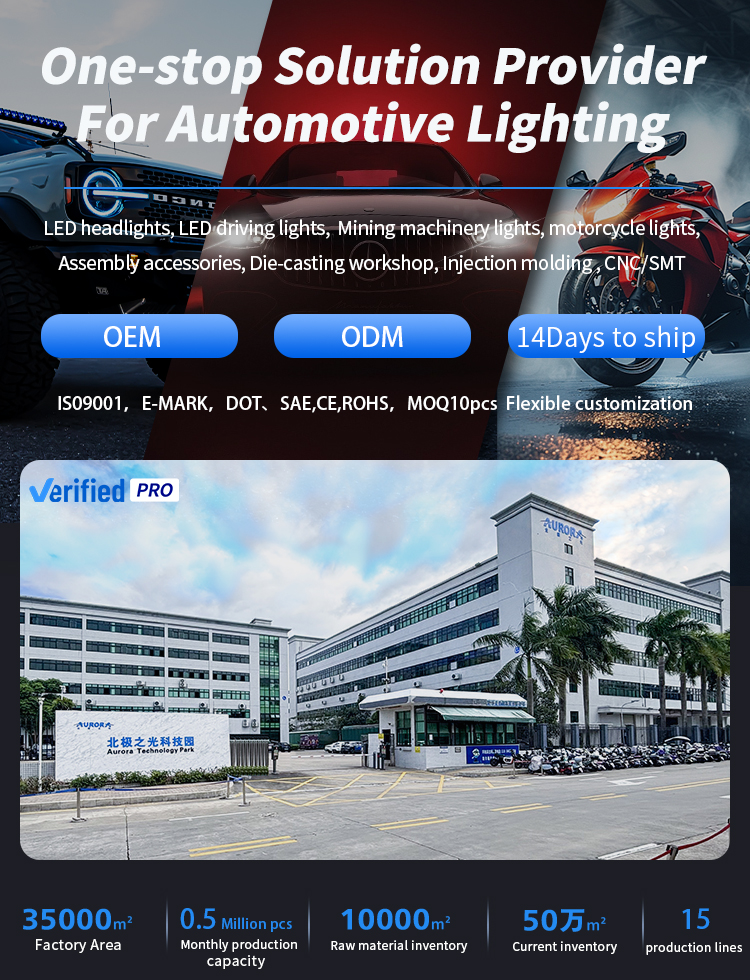
Shenzhen Aurora Technology Co., Ltd. exemplifies this innovation-driven approach. Since 2011, Aurora has focused on addressing critical industry pain points through patented solutions. Their proprietary “1+1” structure integrating PCBA and heatsink represents a fundamental advancement in thermal management, while their redesigned housing prevents the waterproof failures plaguing standard light bars.
With recognition as a National High-Tech Enterprise and ranking among Shenzhen’s Top 20 High-growth companies by Deloitte, Aurora demonstrates how engineering excellence translates into market success. Their 15 years of manufacturing experience, combined with 100% independent design and over 200 global patents, positions them as an authority in automotive LED lighting innovation.
Conclusion: Reliability Through Engineering Excellence
Common LED lighting failures—waterproofing issues, thermal management deficiencies, optical inefficiencies, and component reliability problems—stem from fundamental design limitations rather than inevitable technical constraints. Manufacturers committed to engineering excellence, proprietary innovation, and rigorous quality control successfully overcome these challenges, delivering products with 50,000+ hour lifespans and genuine all-weather reliability.
For distributors, OEM partners, and end-users seeking dependable LED lighting solutions, selecting manufacturers with proven track records of innovation and quality certification provides assurance that products will perform reliably in demanding real-world conditions. The difference between failure-prone commodity products and genuinely reliable LED lighting lies in engineering commitment, manufacturing excellence, and sustained innovation focus.
https://www.szaurora.com/
Shenzhen Aurora Technology Co., Ltd. -
AuthorPosts

- You must be logged in to reply to this topic.