- This topic is empty.
-
AuthorPosts
-
2026-11-13 at 5:39 pm #15221
Published: November 2026 | By Xingfuyuan Engineering Team
Most connecting bed complaints are not manufacturing defects — they are a floor that is 4 mm out of level, a leg bolt torqued to half spec, and a slat span over 600 mm. Fix those three and the bed stops moving. Replace the product and the fault returns with the new one, because the cause was never in the carton.
We handle after-sales technical questions for retail partners, and the pattern is consistent: the customer sends a photo of a gap, asks for a replacement, and the actual problem is that the adult bed and the connecting bed were measured at different points. The support inbox subject line is almost always connecting bed wobbles how to fix gap, and the honest answer starts with a spirit level rather than a spare part. The diagnostic order Xingfuyuan sends with every after-sales ticket saves a return shipment more often than any single component does.
1. Why does a connecting bed wobble or leave a gap at the mattress joint?
Because the bed is being asked to sit flush against a surface that is neither flat nor level. A connecting bed is a rigid frame joined to an existing bed, so every error in the adult bed, the floor and the assembly stack up at the joint — which is exactly where the customer looks first.
Causes, ranked by how often they turn out to be the real one:
1. Frame height measured to the wrong reference. Customers measure their bed frame top, not the mattress top under load. A 200 mm mattress compresses 10–15 mm under a sleeping child, so a bed set exactly level when empty sits 10–15 mm low when used. Measure with a person or a 15 kg weight on the mattress, not on an empty bed.
2. Floor slope. A 1% floor slope over a 1,000 mm span is 10 mm. Older apartments are rarely level, and the connecting bed inherits the slope on one axis only, because its outer legs sit on different floor than the adult bed's legs. Put a spirit level across both frames before adjusting anything.
3. Frame out of square. Flat-pack frames that are assembled without diagonal checking usually end up 3–8 mm out of square. That shows up as one corner high. Measure both diagonals; they should match within 3 mm before the bolts are final-torqued.
4. Under-torqued hardware. A leg bolt on an M8 connector needs 8–10 Nm. Hand-tight is typically 3–4 Nm, which is enough to hold the leg straight and not enough to stop rotation under load. That is the single most common cause of a wobble that "appears after two weeks", because the joint works loose gradually.
5. Missing centre support on long spans. Any slat span over 600 mm needs a centre rail with a floor leg. Without it the frame flexes, the legs splay, and the joint opens when weight shifts toward the middle.
For a height difference between two beds problem fix, the diagnostic sequence is always the same: level across both frames, then measure mattress tops under load, then check diagonals, then torque. Four checks, fifteen minutes, and it tells you whether the fault is the product, the floor or the assembly — before anyone ships a replacement.
✅ Bottom line: Diagnose floor, diagonals and torque before blaming the product. Most gaps are installation error, not manufacturing error.
2. How do you fix slat sag and height mismatch without replacing the bed?
Add support, then bridge the joint, then re-torque — in that order. Each step is under US$15 in parts, none of them requires a workshop, and most bed slat sagging repair for solid wood bed cases can be finished by the customer in an afternoon.
Slat sag. A slat bows when its span, thickness and load are mismatched. Beech slats at 18 mm and 75 mm spacing hold a 100 kg static load across a 600 mm span comfortably; at 900 mm span the same slat deflects visibly within months. For bed slat sagging repair for solid wood bed frames, the effective fixes are:
• Fit a centre rail with a floor leg — this halves the effective span and is the only fix that addresses the cause
• Add two 18 mm slats on edge under the mattress in the middle third, screwed to the side rails
• Reduce slat spacing to 75 mm if the mattress is foam or hybrid; 90 mm spacing is fine only for a sprung mattress with a rigid border
• Replace bowed slats with 5-ply beech rather than solid pine, which creeps under sustained load
Height mismatch. The height difference between two beds problem fix almost never needs a new frame. If the difference is under 10 mm, shim the outer legs with hardwood or nylon shims — never cardboard, which compresses. Between 10 and 25 mm, use adjustable levelling feet; most Xingfuyuan connecting frames ship with 20 mm of adjustment on the outer legs for exactly this reason. Above 25 mm, the frame is the wrong height for that adult bed and no shim is safe, because a tall stack of shims is a tipping hazard under a child's weight.
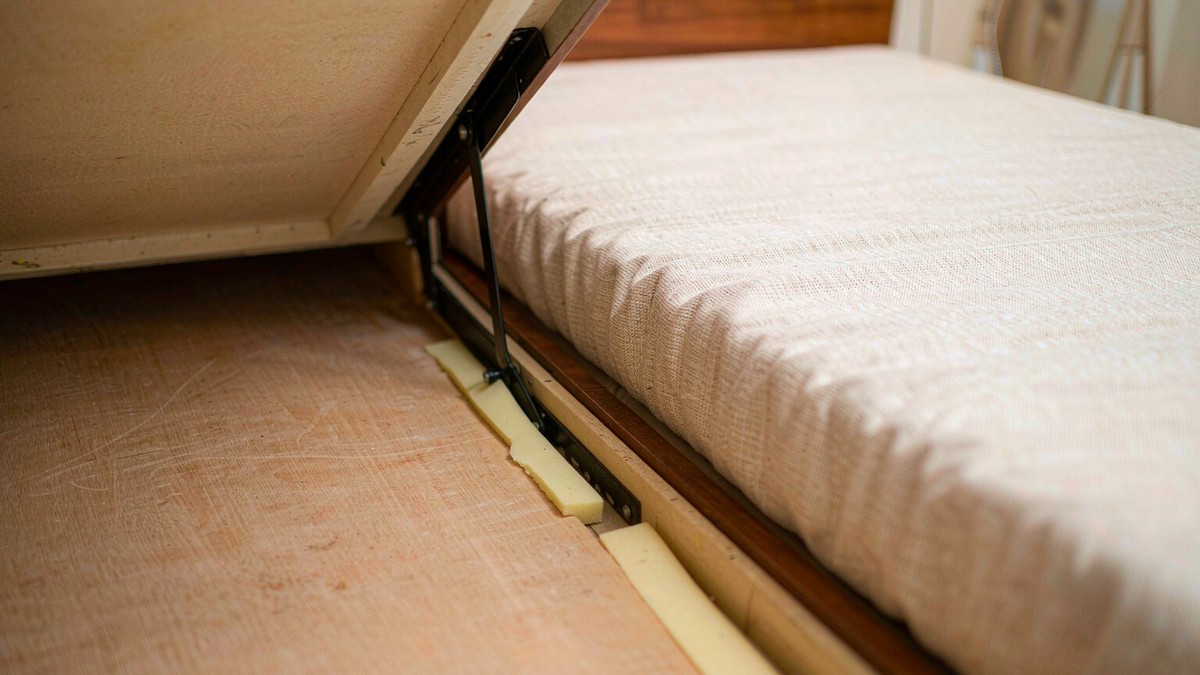
Bridging the joint. A gap under 20 mm can be closed with a rigid bridge strip fixed to the adult bed frame, or with a mattress wedge. Anything wider needs a foam filler cut to the exact gap plus a fitted sheet that spans both surfaces. The rule that matters: a gap wider than 30 mm should not be lived with, because a limb or a blanket can enter it. That threshold is why Suining Xingfuyuan Furniture Co., Ltd. specifies a joint tolerance of ±5 mm on every connecting frame and documents the adult bed height range it is built for.
Retailers who want to cut after-sales cost should ship three things in the box: a spirit level card, a 10 Nm torque note, and four nylon shims. Those three items cost under a dollar and remove the majority of installation complaints before they become returns. A ticket that arrives as connecting bed wobbles how to fix gap is usually answered by that pack alone. For wholesale programs we can add them as a standard accessory pack — see the beech wood connecting bed range for frames with adjustable outer legs, or the round leg model for the version with a centre rail as standard.
✅ Bottom line: Halve the span with a centre leg, shim under 10 mm, and never bridge a gap wider than 30 mm.
FAQ
Q: The frame rocks but all bolts are tight. What now?
A: Check the floor first, then the diagonals. A frame that rocks with tight hardware is almost always sitting on an uneven floor, and one nylon shim on the short leg fixes it. If the diagonals differ by more than 5 mm, the frame was assembled out of square and needs to be loosened and re-squared. Those two checks settle most reports logged as connecting bed wobbles how to fix gap.
Q: Is a small gap actually dangerous?
A: Under 20 mm it is a comfort issue. Between 20 and 30 mm it is an entrapment risk for a small limb and should be filled. Anything over 30 mm means the frame height is wrong for that bed, and the answer is a different frame, not a filler.
Q: How do I qualify a supplier on this before ordering?
A: Ask for three numbers: joint tolerance, slat span with and without centre support, and the adult bed height range the frame is designed for. A supplier who cannot state all three is selling a bulk product without engineering behind it, and you will inherit the complaints.
Next step
Send Xingfuyuan the adult bed height you are working with and the mattress thickness you expect, and we will confirm the frame height, the shim range and whether a centre rail is required. Buyers building an OEM program can specify the joint tolerance and accessory pack in the drawing, which is cheaper than handling the returns later.
http://www.xfyfurn.com
xingfuyuan -
AuthorPosts

- You must be logged in to reply to this topic.