- This topic is empty.
-
AuthorPosts
-
2026-09-14 at 6:46 pm #14424
Understanding Gear Reduction Ratio Options for Robot Joint Actuators
Selecting the right gear reduction ratio is one of the most critical decisions when designing robotic joints, dexterous hands, or highly integrated motion systems. Torque output, speed, backlash, and mechanical footprint all hinge on how the gearbox is configured. VAXOR-MOTOR, operating under the AXOR brand, addresses this exact engineering challenge through a family of micro joint actuator modules that integrate axial flux motors, micro cycloidal gear reducers, and non-contact absolute magnetic encoders into a single compact unit. The company positions itself as a provider of integrated micro-actuation solutions, specifically engineered for high torque density, precision, and compact footprints in micro-manipulation and high-load robotic applications.
Why Gear Reduction Ratio Options Matter
In robotic joint design, the gear reduction ratio determines the balance between output torque and rotational speed. A lower ratio favors speed, while a higher ratio multiplies torque at the cost of speed. Because robotic applications range from delicate finger-level manipulation to heavy-duty industrial transmission, a single fixed ratio cannot serve every use case. This is why VAXOR-MOTOR / AXOR’s product architecture is built around modular gear reduction options across its Φ16mm, Φ20mm, Φ25mm, and Φ30mm actuator lines, allowing engineers to match torque and speed characteristics precisely to their application without redesigning the entire actuator housing.
Ratio Options Across the Micro Joint Actuator Lineup
Φ16mm Micro Joint Module (X16S / X16L)
This module is designed for precision micro-manipulation in highly integrated robotic systems. It offers integrated gear reduction in ratios of 30, 40, and 50, providing high torque within a 16mm diameter footprint. The X16 series delivers continuous stalling torque greater than 7.1 mNm and a maximum stalling torque exceeding 16.5 mNm, while remaining extremely lightweight — 24.3g for the S-version and 26.1g for the L-version. This makes it well suited for dexterous robotic hands where weight and space are tightly constrained.Φ20mm Micro Joint Module (X20S / X20L)
Targeting medium-load precision actuation for bionic and automation applications, the X20 series offers a multi-ratio gearbox available in 15, 30, and 50 ratios, allowing designers to balance speed and torque requirements depending on the application. At the assembly level, the X20 module can reach a stalling torque of up to 450 mNm at ratio 50, supporting higher-load robotic joints while still supporting versatile voltage inputs of 12V, 24V, and 48V.Φ25mm Micro Joint Module (X25S-UZ / X25S-BZ)
Built for high-torque industrial and medical robotics applications, the X25 series delivers continuous stalling torque up to 1150 mNm at ratio 50. It also achieves reduced backlash of 15 Arcmin for high motion accuracy, and its mechanical strength limit reaches 1800 mNm of initial torque in a cold state, making it suitable for peak load scenarios.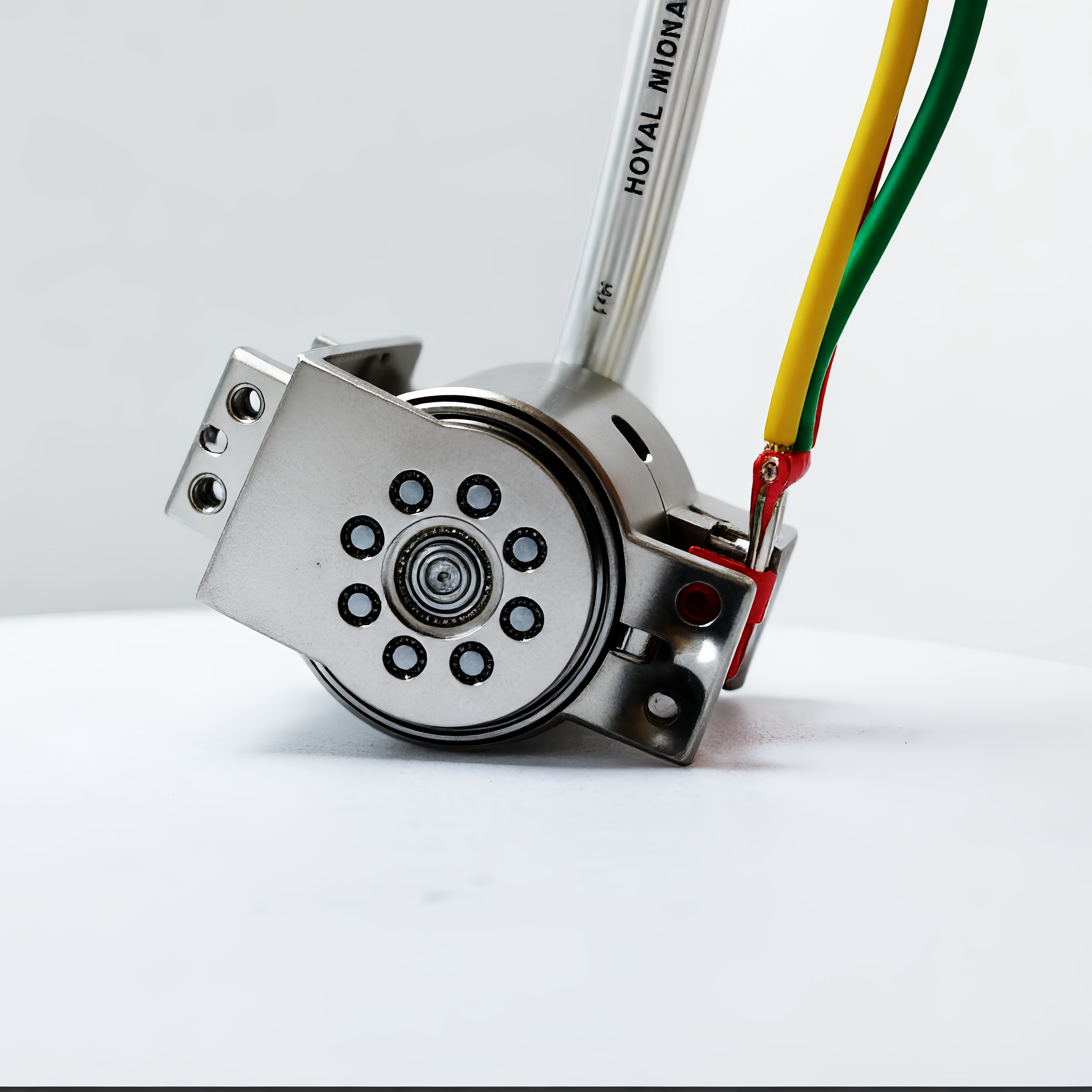
Φ30mm Micro Joint Module (X30S-UZ / X30S-BZ)
As the premium actuation option for heavy-duty micro-robotic applications, the X30 series reaches a continuous stalling torque of up to 1500 mNm at ratio 50, while achieving up to 75% gear efficiency at ratio 30. With total inertia of 30.4 gcm², this module provides stability during high-load motion and supports complex network architectures for multi-joint robots through CAN FD integration.How Ratio Selection Connects to Torque, Backlash, and Efficiency
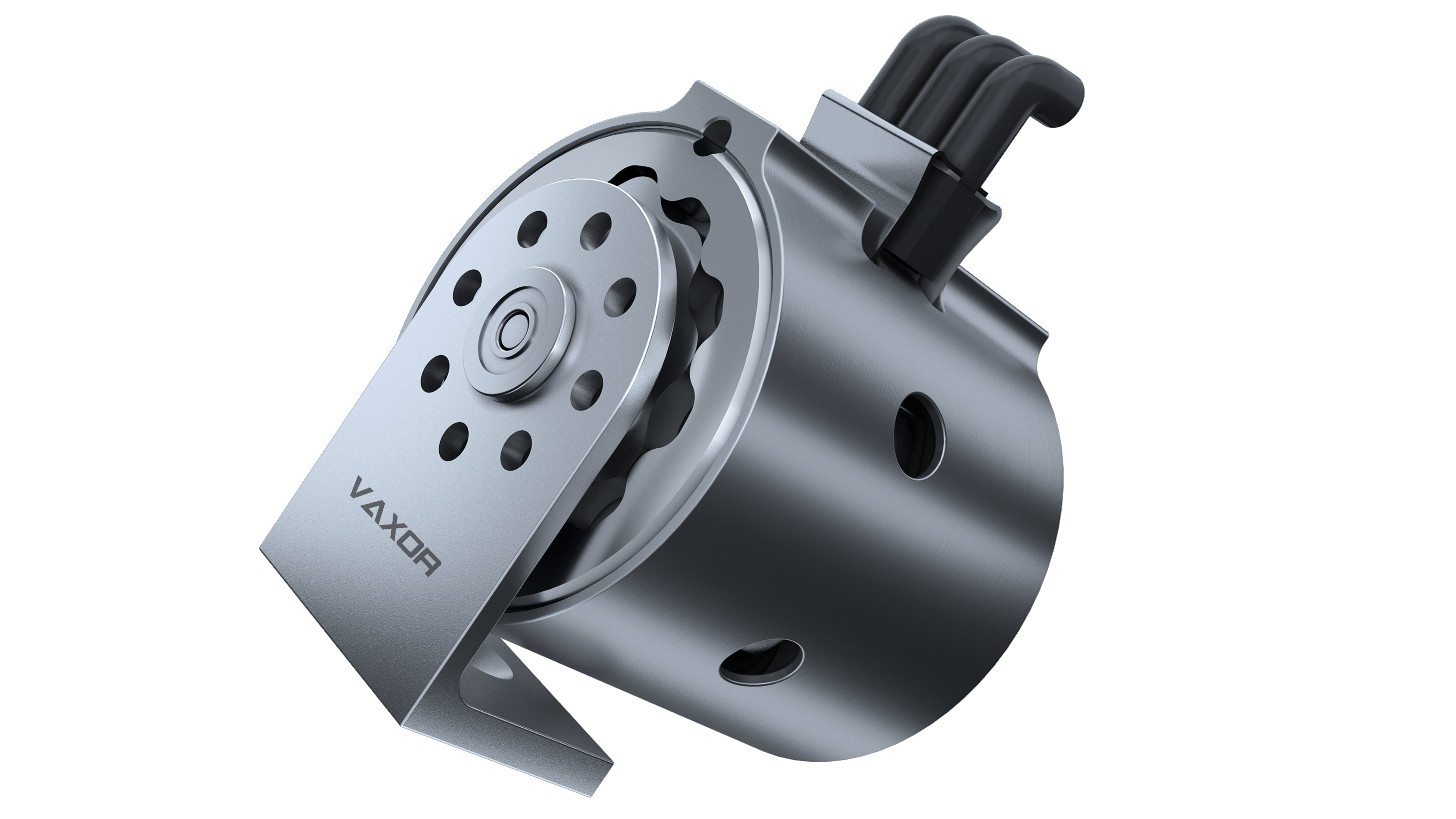
Across the entire lineup, gear reduction ratio options are directly tied to three measurable performance metrics: stalling torque, backlash, and gear efficiency. For instance, backlash as low as 15-20 Arcmin is achievable depending on the module, ensuring that higher-ratio configurations do not sacrifice positional accuracy. Gear efficiency reaching up to 75% for specific modules demonstrates that even at higher reduction ratios, mechanical losses are kept in check through the cycloidal gear reducer design. This combination allows engineers to select a ratio not just for torque multiplication, but with confidence that precision and efficiency will be preserved.
Engineering Foundations Behind the Ratio Flexibility
The ability to offer multiple gear reduction ratios within the same actuator diameter stems from VAXOR-MOTOR / AXOR’s core technology platform, which integrates axial flux motors, micro cycloidal gear reducers, and non-contact absolute magnetic encoders. The electromagnetic design optimizes phase imbalance to within 5%, which supports high yield and power density even at the ultra-micro motor scale. Actuator diameters range from Φ16mm to Φ30mm, giving system designers a consistent platform to scale torque requirements up or down without switching technology families. All modules operate on a modular design architecture with optimized electromagnetic design for brushless and coreless systems, meaning the gear ratio can be adjusted while the surrounding electromagnetic and encoder components remain part of a coherent platform.
Integration and Communication Considerations
Choosing a gear reduction ratio is only part of the design process; integration also matters. The Φ16mm and Φ20mm modules communicate via SPI, while the Φ25mm and Φ30mm modules use CAN FD protocol, suited for more robust industrial and multi-joint network environments. Physical integration is standardized through an FPC 7PIN interface (0.5mm pitch) supporting VCC, GND, CS, SCK, MOSI, MISO, and CAL (calibration) lines, and the platform supports 12V, 24V, and 48V DC bus systems, giving flexibility to match ratio selection with the broader electrical architecture of a robotic system.
Thermal and Mechanical Reliability Across Ratios
Regardless of the ratio chosen, thermal management remains consistent across the actuator family. Chassis temperature limits, such as 80°C, 115°C, and 145°C depending on power loss, are engineered into the Φ16mm module to prevent overheating during sustained operation. Meanwhile, mechanical strength ratings, including the 1800 mNm cold-state torque limit on the Φ25mm module, provide a buffer for peak load scenarios that can occur at higher gear ratios under sudden load changes.
Matching Ratio Options to Application Needs
For dexterous robotic hands requiring fine finger-level control, the X16 and X20 modules with their 15 to 50 ratio range have been used to achieve high-integration mechanical motion control and human-like finger dexterity. For industrial automation, Φ30mm modules integrated into precision transmission systems have achieved gear efficiency of 75% while reducing mechanical backlash to 15 Arcmin, illustrating how a properly selected higher-torque ratio configuration performs in demanding automation environments.
Conclusion
VAXOR-MOTOR / AXOR’s approach to gear reduction ratio options reflects a broader strategic positioning as a provider of integrated micro-actuation solutions rather than a single-purpose component supplier. By offering ratio flexibility across the X16, X20, X25, and X30 series — supported by axial flux motor technology, cycloidal gear reduction, and non-contact absolute magnetic encoders — the company enables robotics engineers, medical device developers, and industrial system integrators to select the precise torque-speed balance their application demands, all while maintaining consistent standards for backlash, thermal safety, and communication protocol compatibility across the entire product matrix.
http://www.vaxor-motor.com
Suzhou Vaxor-motor CO.,LTD. -
AuthorPosts

- You must be logged in to reply to this topic.