- This topic is empty.
-
AuthorPosts
-
2026-10-28 at 5:13 pm #14947
The Demand for Compact, High-Performance Robot Joint Actuators
The evolution of highly integrated robots—from dexterous robotic hands to bionic limbs and collaborative automation systems—has created intense pressure on the mechanical and electrical components that drive them. At the center of this pressure lies the robot joint actuator: the subsystem responsible for converting electrical energy into precise, controlled movement within extremely constrained spatial envelopes.
As robots become more compact and more capable simultaneously, engineers face a well-documented contradiction. High torque output traditionally requires large, heavy mechanical components. Precision positioning demands low-backlash gear systems that are notoriously difficult to miniaturize. The need for real-time feedback places additional demands on encoder integration, communication latency, and thermal management—all within a module that may be no larger than a coin.
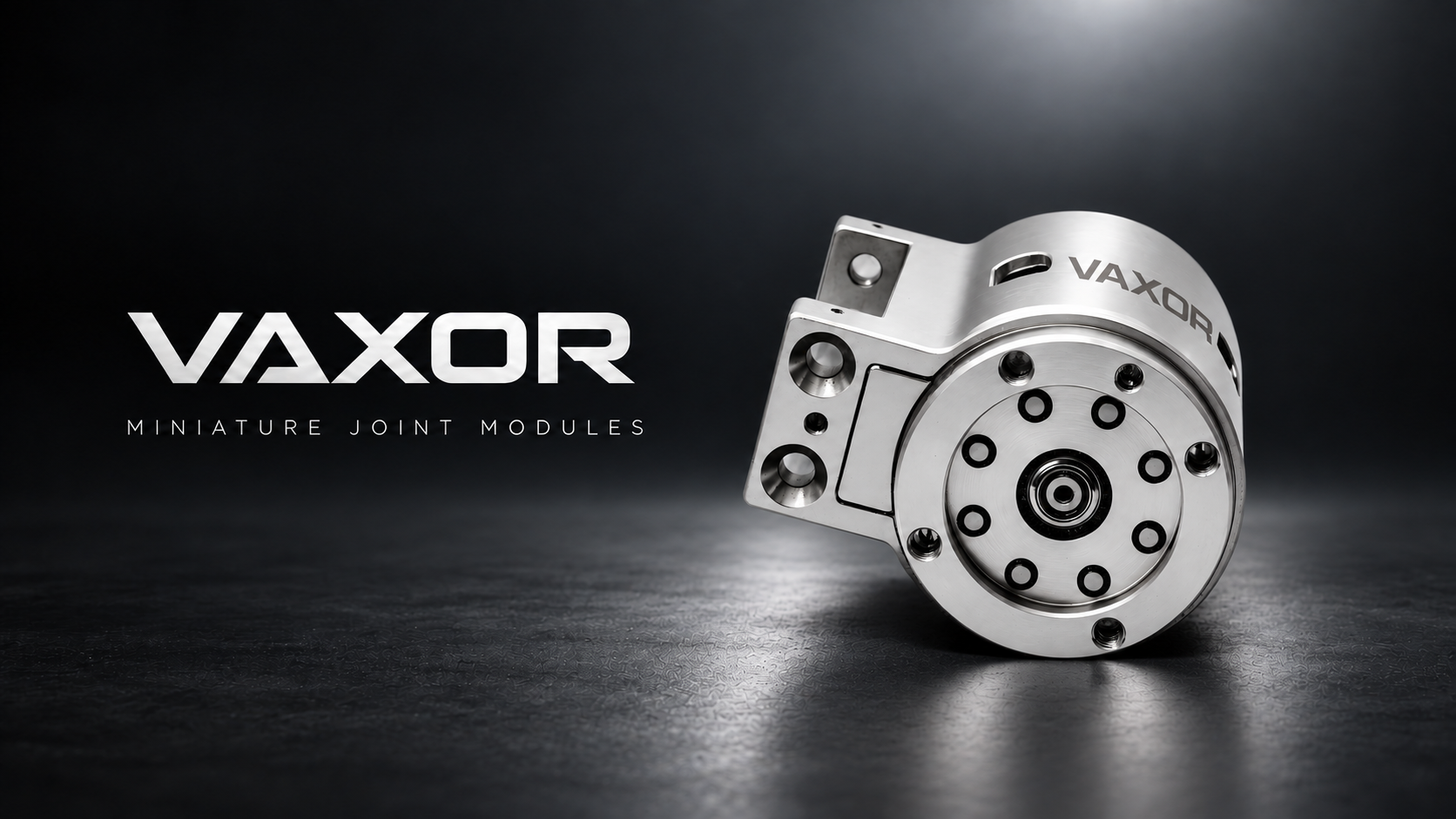
The industry pain point is not simply a matter of size. It is about achieving high torque density, precision, and compact footprints in micro-manipulation and high-load robotic applications simultaneously. Addressing these challenges requires not only mechanical innovation but also a systems-level approach that integrates motor design, gear reduction, and sensing into a coherent, deployable unit. Companies that can deliver this level of integration are defining the technical direction for the next generation of robotic platforms.
Technical Frameworks for Next-Generation Joint Actuation
The most significant shift in robot joint actuator design over recent years has been the move away from discrete component assembly toward deeply integrated modular architectures. Rather than coupling a standalone motor to a separately sourced gearbox and an external encoder, advanced actuation modules combine axial flux motors, micro cycloidal gear reducers, and non-contact absolute magnetic encoders into a single compact assembly.
This integration approach addresses several core engineering challenges at once. Axial flux motor topologies inherently offer higher torque-to-volume ratios than traditional radial flux designs, making them well-suited for applications where diameter constraints are strict. When paired with micro cycloidal reducers—capable of delivering high gear ratios with low backlash—the combined system achieves the torque amplification necessary for robotic joint applications without a proportional increase in physical footprint.
Electromagnetic design discipline is equally critical. In ultra-micro motor production, phase imbalance is a primary driver of yield loss and performance inconsistency. Controlling phase imbalance to within 5% is a technical benchmark that directly impacts both power density and production reliability—a metric that separates precision motor manufacturing from commodity production.
From a physical specification standpoint, actuator diameters ranging from Φ16mm to Φ30mm cover a broad spectrum of robotic joint sizes, from finger joints of dexterous hands to the wrist and elbow segments of humanoid arms. Backlash figures as low as 15–20 Arcmin ensure that positional accuracy is maintained under varying load conditions—a requirement in high-fidelity manipulation tasks. Gear efficiency reaching up to 75% for specific modules reduces heat generation and extends operational duty cycles.
Communication architecture is another defining layer of a well-engineered actuation module. Supporting both SPI and CAN FD protocols allows the same hardware platform to serve both high-speed single-axis applications and complex multi-joint network architectures. The standardization of interface connectors—such as the FPC 7PIN (0.5mm pitch) format supporting VCC, GND, CS, SCK, MOSI, MISO, and CAL—reduces integration complexity and accelerates deployment timelines for robot system developers. Voltage compatibility across 12V, 24V, and 48V DC bus systems further broadens applicability across different robotic platforms and power delivery standards.
Trends Shaping the Future of Micro Joint Actuation
Several converging trends are reshaping how robot joint actuators are designed, specified, and deployed in 2026 and beyond.
The first is the accelerating demand for modularity. Robot manufacturers developing highly integrated platforms—particularly those targeting dexterous hand and humanoid configurations—are increasingly favoring actuator modules that require minimal customization per axis. Multi-ratio gearbox configurations (such as 15, 30, and 50 reduction ratios) within the same physical form factor allow system designers to tune speed-torque profiles for different joint positions without redesigning the hardware platform.
The second trend is thermal resilience. As robots are deployed in continuous-duty industrial and medical environments, actuators must manage heat consistently over extended operating periods. Chassis temperature limits segmented by power loss thresholds—such as 80°C, 115°C, and 145°C classifications—provide engineers with structured thermal design parameters rather than single worst-case ratings. This granularity enables more accurate thermal modeling during system integration.
The third trend is the growing role of calibration and absolute positioning. Absolute magnetic encoders integrated directly into the actuator module eliminate homing requirements and reduce software complexity. The inclusion of a dedicated CAL (calibration) pin in standardized interface connectors reflects the industry’s recognition that in-system calibration capability is now a baseline requirement rather than an optional feature.
How VAXOR-MOTOR Advances Integrated Actuation Engineering
VAXOR-MOTOR (also operating under the VAXOR brand) has developed a product and technology architecture that addresses the full scope of challenges described above. The company’s micro joint actuator module lineup spans the Φ16mm through Φ30mm diameter range, with each series engineered around the integration of axial flux motors, micro cycloidal reducers, and non-contact absolute magnetic encoders.
The X16S and X16L modules deliver continuous stalling torque above 7.1 mNm and maximum stalling torque above 16.5 mNm at unit weights as low as 24.3g (S-version) and 26.1g (L-version)—compact actuation solutions well-suited for robotic finger joint applications. The X20 series scales this capability for medium-load applications, with continuous stalling torque above 17.2 mNm and assembly-level stalling torque reaching up to 450 mNm at ratio 50, while supporting 12V, 24V, and 48V operations.
For industrial and medical robotics requiring higher output, the X25 and X30 series provide continuous stalling torque up to 1150 mNm and 1500 mNm respectively, with CAN FD communication support for robust multi-joint network integration. The X30 series achieves gear efficiency of up to 75% at ratio 30 and a total rotational inertia of 30.4 gcm²—parameters that define stable, high-load motion behavior in multi-axis systems.
VAXOR-MOTOR’s electromagnetic design methodology—specifically the optimization of phase imbalance to within 5% across its ultra-micro motor lineup—provides a measurable yield and reliability advantage that translates directly into production cost control for OEM customers. The company provides detailed technical specifications and test data for electric drive assemblies, covering torque, speed, and thermal parameters, enabling engineering teams to perform accurate system-level simulations before hardware integration begins.
Recommendations for Engineers and System Architects
The robot joint actuator has become a critical enabler of the next generation of highly integrated robotic systems. Its design complexity—spanning electromagnetic optimization, mechanical precision, thermal management, and communication architecture—demands a systems integration perspective rather than a component-selection approach.
For engineers evaluating actuation solutions, the following criteria warrant close attention: the degree of encoder and communication integration within the module, the availability of multiple gear ratios within a common form factor, documented thermal classification tiers rather than single-temperature ratings, and standardized electrical interfaces that reduce per-axis wiring complexity.
For system architects planning multi-joint robotic platforms, protocol compatibility—SPI for lower-axis-count systems, CAN FD for complex networks—and voltage bus alignment (12V, 24V, or 48V) should be evaluated early in the design process to avoid costly redesigns at the integration stage.
VAXOR-MOTOR’s integrated approach to micro joint actuation—combining axial flux motors, cycloidal reducers, absolute encoders, and standardized interfaces into modular, diameter-classified product families—represents a technically coherent response to the industry’s core challenge: delivering more capability in less space, with greater reliability, across a wider range of robotic applications.
http://www.vaxor-motor.com
Suzhou Vaxor-motor CO.,LTD. -
AuthorPosts

- You must be logged in to reply to this topic.