- This topic is empty.
-
AuthorPosts
-
2026-06-22 at 2:35 pm #13411
Fuel consumption is one of the most frequently asked questions among riders, buyers, and distributors when it comes to high-performance bikes. A racing motorcycle is designed primarily for speed, acceleration, and track performance—but these capabilities come with a trade-off: fuel efficiency.
Unlike standard commuter motorcycles, a high-performance racing motorcycle operates at higher RPMs, uses more aggressive fuel mapping, and prioritizes power output over economy. As a result, fuel consumption varies significantly depending on engine size, riding style, tuning level, and riding conditions.
In this article, we will break down the real fuel consumption of racing motorcycles, explore how different factors influence efficiency, and explain what riders can expect from various engine classes such as 250cc, 400cc, and larger displacement sport bikes.
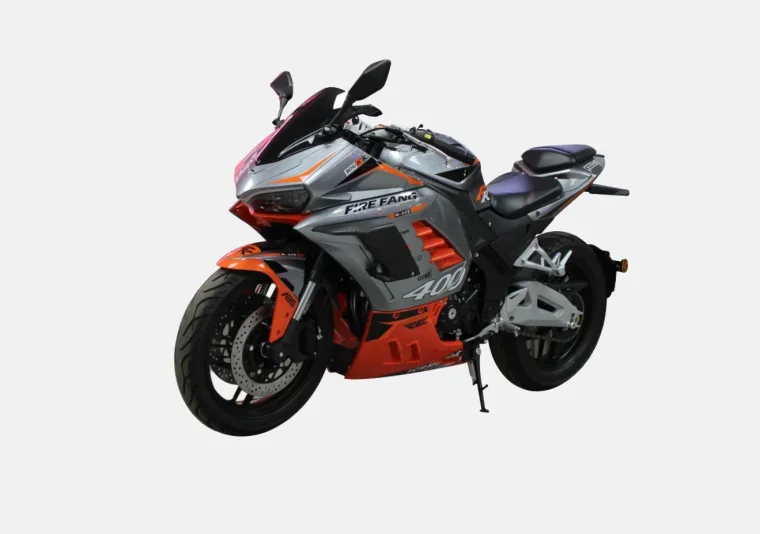
Understanding Fuel Consumption in Racing Motorcycles
Fuel consumption refers to how much fuel a motorcycle uses over a certain distance or time. For a sport motorcycle or racing motorcycle, this is usually measured in:
-
Liters per 100 km (L/100km)
-
Kilometers per liter (km/L)
-
Miles per gallon (MPG)
However, unlike standard motorcycles, racing-focused machines do not prioritize fuel economy. Instead, they are optimized for:
-
Maximum horsepower
-
High RPM stability
-
Rapid throttle response
-
Track-level performance
This means that fuel efficiency is always secondary.
Average Fuel Consumption of Racing Motorcycles
Fuel consumption varies greatly depending on engine displacement and usage conditions. Below is a general breakdown of typical real-world performance.
1. 150cc–250cc Entry-Level Racing Motorcycles
Smaller displacement lightweight racing motorcycles are the most fuel-efficient in the performance category.
-
Average fuel consumption: 25–35 km/L
-
Track riding: lower efficiency due to high RPM use
-
City riding: relatively efficient for daily commuting
These motorcycles are often used by beginners or riders transitioning into the sport motorcycle category. They offer a good balance between performance and fuel economy.
2. 300cc–400cc Racing Motorcycles
The 400cc racing motorcycle segment is one of the most popular globally because it balances performance and practicality.
-
Average fuel consumption: 20–30 km/L
-
Aggressive riding: 15–20 km/L
-
Highway cruising: up to 30 km/L
This category is widely used for both street riding and occasional track use. It provides stronger acceleration while still maintaining reasonable fuel efficiency for daily use.
3. 500cc–650cc Sport Motorcycles
Mid-to-high displacement sport motorcycles consume noticeably more fuel due to increased power output.
-
Average fuel consumption: 15–22 km/L
-
Track conditions: significantly lower
-
High-speed riding: increased consumption
These motorcycles are often used by experienced riders who prioritize performance over economy.
4. 700cc+ High-Performance Racing Motorcycles
Large-displacement racing machines focus almost entirely on power and speed.
-
Average fuel consumption: 10–18 km/L
-
Track racing: can drop below 10 km/L
-
Aggressive throttle use increases consumption dramatically
A high-performance racing motorcycle in this category is designed for maximum output, meaning fuel efficiency is not a design priority.
Key Factors That Affect Fuel Consumption
Fuel consumption in a racing motorcycle is not fixed. It changes based on several technical and behavioral factors.
1. Engine Displacement
Engine size is the most obvious factor affecting fuel consumption.
-
Larger engines burn more fuel per cycle
-
Smaller engines are more efficient but less powerful
For example, a 400cc racing motorcycle offers a balanced middle ground between performance and fuel economy.
2. Riding Style
How a rider uses the motorcycle has a major impact on fuel consumption.
Aggressive Riding
-
Frequent acceleration and hard braking
-
High RPM usage
-
Continuous throttle input
This significantly increases fuel consumption.
Smooth Riding
-
Steady throttle control
-
Moderate RPM range
-
Predictable acceleration
This improves efficiency even in a sport motorcycle setup.
3. RPM Level and Gear Usage
Racing motorcycles are designed to operate at high RPMs, but fuel consumption increases rapidly at high engine speeds.
-
Lower RPM = better fuel efficiency
-
Higher RPM = more fuel consumption
Proper gear shifting plays a key role in balancing performance and economy.
4. ECU Tuning and Fuel Mapping
Modern racing motorcycle engines use ECU systems to control fuel injection.
-
Rich fuel mapping = more power, higher consumption
-
Lean fuel mapping = better efficiency, less power
Track-tuned motorcycles usually prioritize performance over economy.
5. Weight and Aerodynamics
A lightweight racing motorcycle typically consumes less fuel than heavier models under similar conditions.
Aerodynamic efficiency also matters:
-
Better airflow reduces engine load
-
Poor aerodynamics increase drag and fuel usage
This is why sport motorcycles use streamlined body designs.
6. Tire Type and Road Conditions
Tires and road surfaces also affect fuel efficiency.
-
Soft racing tires increase grip but reduce efficiency
-
Rough or uphill roads increase fuel consumption
-
Smooth highways improve mileage
Racing vs Commuter Motorcycle Fuel Consumption
To better understand the difference:
-
Standard commuter motorcycles: 40–70 km/L
-
Sport motorcycles: 20–35 km/L
-
Racing motorcycles: 10–30 km/L depending on use
The key difference is design intent. A commuter bike prioritizes economy, while a racing motorcycle prioritizes performance and speed.
Fuel Consumption in Track vs Street Riding
A major distinction must be made between usage environments.
Street Riding
-
Moderate RPM
-
Frequent cruising
-
Better fuel efficiency
Track Racing
-
Constant acceleration
-
High RPM usage
-
Rapid braking and throttle cycles
A track racing motorcycle can consume significantly more fuel during racing conditions compared to normal road use.
OEM Perspective: Why Fuel Efficiency Is Secondary
From a manufacturing point of view, OEM racing motorcycle manufacturers prioritize:
-
Power output
-
Engine durability under stress
-
Cooling efficiency
-
Acceleration performance
Fuel economy is considered, but it is not the primary design goal. This is why racing motorcycles typically have higher consumption rates compared to standard motorcycles.
How to Improve Fuel Efficiency in Racing Motorcycles
Even though racing motorcycles are not designed for economy, riders can still improve efficiency.
1. Maintain Proper Tire Pressure
Incorrect tire pressure increases rolling resistance.
2. Avoid Constant High RPM Riding
Sustained redline operation significantly increases fuel usage.
3. Regular Engine Maintenance
Clean air filters and properly tuned engines improve combustion efficiency.
4. Use Proper Gear Shifting
Shifting at optimal RPM reduces unnecessary fuel burn.
5. Avoid Excessive Weight Load
Extra weight increases engine workload and fuel consumption.
Realistic Expectations for Buyers
For riders or distributors considering a high-performance racing motorcycle, it is important to set realistic expectations:
-
Fuel efficiency is secondary to performance
-
Consumption varies widely based on usage
-
Larger engines naturally consume more fuel
-
Track use dramatically increases fuel consumption
Understanding this helps avoid incorrect assumptions when selecting a motorcycle model.
Conclusion
So, what is the fuel consumption of racing motorcycles?
The answer depends heavily on engine size, riding style, and usage conditions. Smaller lightweight racing motorcycles can achieve relatively good efficiency, while larger high-performance models prioritize speed and power over fuel economy.
In general, a racing motorcycle is not designed to be fuel-efficient—it is designed to deliver maximum performance. However, with proper riding habits and maintenance, riders can still achieve a reasonable balance between power and consumption.
As motorcycle technology continues to evolve, modern fuel injection systems and ECU optimization are helping improve efficiency without sacrificing performance, making today’s racing motorcycles more advanced and balanced than ever before.
http://www.jilangmotor.com
jilangmotor -
-
AuthorPosts

- You must be logged in to reply to this topic.