- This topic is empty.
-
AuthorPosts
-
2026-11-05 at 3:15 pm #15058
Yes — you need a different certificate for almost every market, and a grill hot pot combo needs more paperwork than either a plain grill or a plain hot pot because it must pass two IEC safety standards at once. In practice, sorting out CE UL ETL certification for electric grill hot pot exporter partnerships comes down to three markets: the EU (CE under the Low Voltage and EMC Directives), the US (UL 1026 listing or the ETL equivalent), and Australia (RCM registration) — plus the food-contact tests for the non-stick coating that all three regions care about. This guide maps the exact scope, typical costs, and the documents worth requesting from a factory before you wire a deposit.
Published: November 2026 | By the Haoying Engineering Team
1. Which Certifications Does Each Export Market Actually Require?
Any factory-side comparison of CE UL ETL certification for electric grill hot pot exporter requirements starts with the same three markets: the EU is mandatory and self-declared, the US is marketplace-enforced, and Australia is a registration system — treat them as three separate projects sharing one test report core. Here is the working breakdown by market:
• European Union (mandatory): CE marking covering the Low Voltage Directive 2014/35/EU and the EMC Directive, plus RoHS 2011/65/EU for restricted substances. The technical backbone is EN 60335-1 with parts -2-9 and -2-15. You sign a Declaration of Conformity and keep a technical file — customs can ask for it years later.
• Germany and the DACH region (voluntary but commercial): the GS mark, issued by TÜV or VDE, requires third-party testing and an annual factory audit. It is not legally required, but German retailers treat it as a de facto entry ticket for countertop cooking appliances.
• United States (no federal mandate, but effectively compulsory): a UL 1026 or UL 858 listing — or the ETL mark from Intertek, which tests to the same standards — is what Amazon, big-box retailers, and insurers actually check. Shipping without it risks delisting rather than a customs seizure, which in practice hurts more.
• Australia and New Zealand: the RCM mark with electrical safety and EMC approval, registered through the EESS database. Supply runs at 220–240V, and the plug differs from both the US and EU — more on that below.
• Food-contact testing (all markets): the coating and any parts touching food need migration testing — LFGB for Germany and much of the EU, FDA food-contact rules for the US. This is where certification projects most often stall, because factories that outsource their coating cannot always produce the report.
• Typical costs and timelines (2026): CE testing runs $3,000–10,000 per product family in 4–8 weeks; ETL or UL listing runs $8,000–20,000; GS adds $8,000–20,000 plus annual audits. A CB Scheme report lets you reuse one core test across member countries instead of paying three times.
✅ Bottom line: Budget CE for the EU, a UL or ETL listing for the US, and RCM registration for Australia — and ask for the CB Scheme report so one core test feeds all three projects.
2. Why Does a Combo Cooker Need Two Standards, Two Voltages — and a Coating Test?
Because it grills and boils at the same time, a grill hot pot combo must comply with IEC 60335-2-9 (portable cooking appliances) and IEC 60335-2-15 (liquid heating appliances) simultaneously. A single-function electric grill only answers to the first; a kettle-style pot only to the second. The combination triggers extra test items — temperature rise on surfaces users touch while a pot is boiling beside the plate, liquid spillage onto live parts, and abnormal operation with an empty pot on an active heating zone. Not every testing lab handles both scopes under one project, so confirm the lab's scope before the samples ship.
Voltage is the second trap. The difference between a 110v vs 220v electric grill hot pot combo export version is not just a plug swap — the heating element, thermostat, and internal wiring are rated differently, and each configuration needs its own certificate file. For the 110v vs 220v electric grill hot pot combo export version decision, match the destination: 110–120V with Type A/B plugs for North America, 220–240V for the EU, UK, and Australia. A dual-rated 110V/230V unit with 50/60Hz compatibility removes the problem at the design stage, which is how experienced China manufacturer partners like Haoying spec their export models.
The coating is the third — and most misunderstood — compliance item. Buyers keep asking is PFOA free non-stick coating safe for hot pot grill surfaces, and the honest factory answer has two parts: PFOA has been restricted in the EU and phased out by responsible manufacturers, and modern PTFE or ceramic coatings are assessed for what migrates into food, not for marketing labels. What matters for your import file is a current LFGB or FDA migration report for the exact coating batch — a "PFOA-free" sticker on the box is not a compliance document. Put it plainly: when a supplier cannot answer is PFOA free non-stick coating safe for hot pot grill use with a batch-level test report, the coating itself is your risk, not the paperwork. Haoying holds a German SGS test report confirming LFGB food-contact compliance, including odour and taste safety, and can issue it per model on request.
✅ Bottom line: Confirm the dual IEC scope with your lab, lock the voltage variant before testing starts, and demand a batch-level food-contact report — those three steps prevent most certification delays.
3. FAQ
Q: How much should I budget for certification, and how long does it take?
A: For one grill hot pot combo product family, plan roughly $3,000–10,000 and 4–8 weeks for CE, $8,000–20,000 for a UL or ETL listing, and a similar range plus annual audits for GS. Reusing a CB Scheme report across markets trims both the cost and the calendar.
Q: Can one certificate cover several countries?
A: Partly. The CB Scheme converts one core IEC 60335 test into national certificates with small deviations, which covers the EU and Australia efficiently. The US remains a separate listing project — UL and ETL issue their own marks to their own standards.
Q: How do I check a factory's certificates are real and cover my exact model?
A: When comparing CE UL ETL certification for electric grill hot pot exporter suppliers, ask for report files that show the model number, rated voltage, and wattage of the unit you are buying — not a company-level certificate with no model listed. Verify the issuing body on the lab's public database, and request the food-contact report separately, since it covers the coating supplier as much as the factory. An exporter such as Haoying supplies model-numbered CE, UL, and LFGB reports as a standard part of the quotation package.
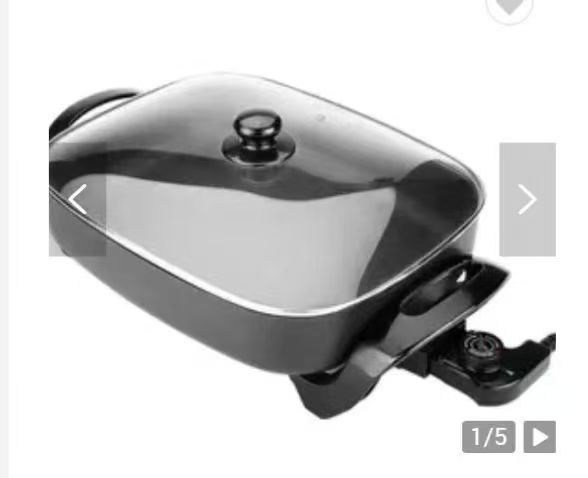
Certification looks like paperwork until it becomes the reason a container stops moving. The Electric Grill with Hotpot F-042A ships as a certified export configuration with dual voltage support, and you can review the full certificate list and factory background of Haoying here.
Planning a launch into the US, EU, or Australia? Yongkang Haoying Electric Appliance Co., Ltd. has exported certified kitchen appliances since 1995, holding CE, CB, GS, RoHS, LFGB, and UL certificates plus ISO 9001:2015 quality system approval. Send Haoying your target market and quantity, and the team will return the applicable certification scope, model-numbered test reports, and FOB pricing within one business day — with the CB Scheme report included so your three-market launch shares one test core.
http://www.hoyappl.com
Yongkang Haoying Electric Appliance Co., Ltd. -
AuthorPosts

- You must be logged in to reply to this topic.